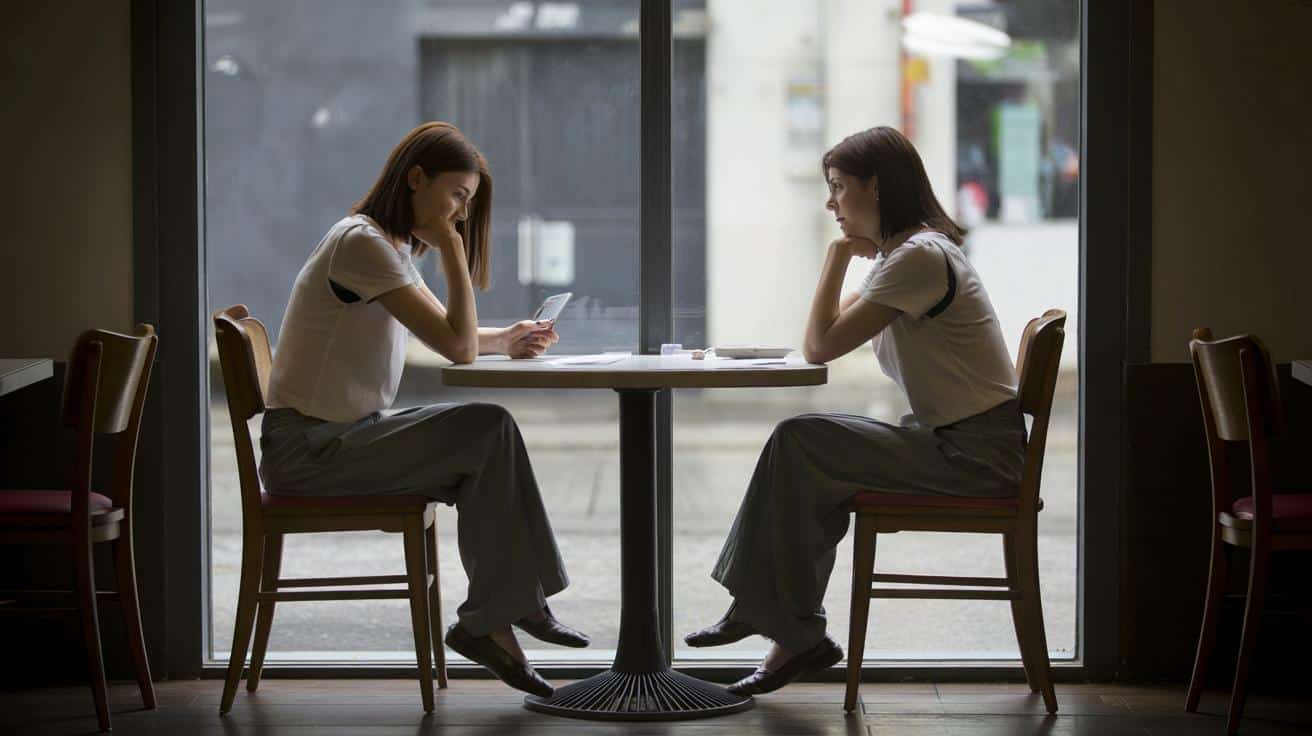
The woman in front of me at the café didn’t say a word, yet her whole body was shouting.
Shoulders folded in, neck craned towards her phone, feet turned inward like she wanted to disappear. When the barista called her name, she straightened a little, smiled out of politeness… then instantly collapsed back into herself. Three minutes later, a friend arrived. Same woman, same table, same coffee. But now her spine woke up, her chest opened, her hands started drawing big shapes in the air as she talked. Her mood looked different before she’d even spoken.
We usually tell ourselves it’s our feelings that change our posture. What if, quietly, discreetly, it often works the other way around too?
The silent conversation between body and mood
Watch any bus stop for five minutes and you’ll see it. The slumped teenager with headphones in. The upright woman scrolling through emails like she’s marching, even while standing still. The man leaning on one hip, shoulders hanging low as if someone pressed an invisible “mute” button on him.
None of them are talking, yet your brain makes instant guesses: stressed, bored, confident, defeated. You could be wrong on the details, but you rarely feel totally off. That’s because posture is not just a physical shape. It’s a signal your nervous system reads all day long, even when you aren’t paying attention.
On a grey Tuesday, a London physiotherapist tracked how office workers sat during a long meeting. At the start, most people were upright, leaning slightly forward. By the 45-minute mark, almost everyone had shifted into a “C” shape: chin poking out, shoulders rounded, lower back sagging into the chair. When participants filled in a short mood questionnaire afterwards, the pattern was odd. Those who had slumped the most didn’t just complain of back discomfort. They also reported more irritability, mental fatigue and mild sadness than colleagues who’d unconsciously kept a more neutral, stacked posture.
It wasn’t a giant clinical trial. It was a normal meeting. Yet the link was clear enough to make the therapist raise an eyebrow. When your body folds in, your emotional world often follows.
There’s a simple reason behind this. Your brain constantly scans your muscles, joints and breathing to guess what’s going on. If your chest is tight, shoulders hunched and breath shallow, your nervous system reads “threat”, “defeat” or “withdrawal”, even if nothing awful is happening. Hormones respond. Heart rate shifts. Your focus narrows.
Flip the script and things change. A spine that lengthens a little, feet planted, jaw unclenched and gaze level sends a different message upward. Not magic. Just a quiet “we’re not under attack right now”. The emotion that comes next might not turn into pure joy. Yet it often softens from overwhelm to manageable, from “I can’t” to “maybe I can handle this bit.” That’s the unnoticed loop between posture and mood playing out in real time.
Using your body as a tiny emotional steering wheel
Try this experiment the next time you feel low-level dread, like before a tricky call or difficult email. Stand up, place both feet flat on the floor, about hip-width apart. Let your weight sink equally into your heels and the balls of your feet. Then imagine a thin thread gently lifting the back of your head towards the ceiling.
Don’t yank your shoulders back like a soldier. Just let your spine stack, vertebra on vertebra, until breathing feels a touch easier. Soften your jaw, unclench your hands, and let your arms hang by your sides. Then take three slow breaths, letting the exhale be slightly longer than the inhale. That’s it. No mantras. No performative “power pose”. Just a small physical reset button.
➡️ Why consistency feels easier when expectations are flexible
➡️ The psychological reason emotional clarity often comes after rest
➡️ “Poor people’s foods” resurface during price instability
➡️ How people regain focus after interruptions without restarting everything
➡️ Feeding birds helps until it disrupts migration timing
➡️ Why mental clarity often follows physical order
➡️ Keep your tank above half: the winter driving habit that prevents a surprisingly common breakdown
➡️ Lawn regulations aim at noise complaints, not ecology
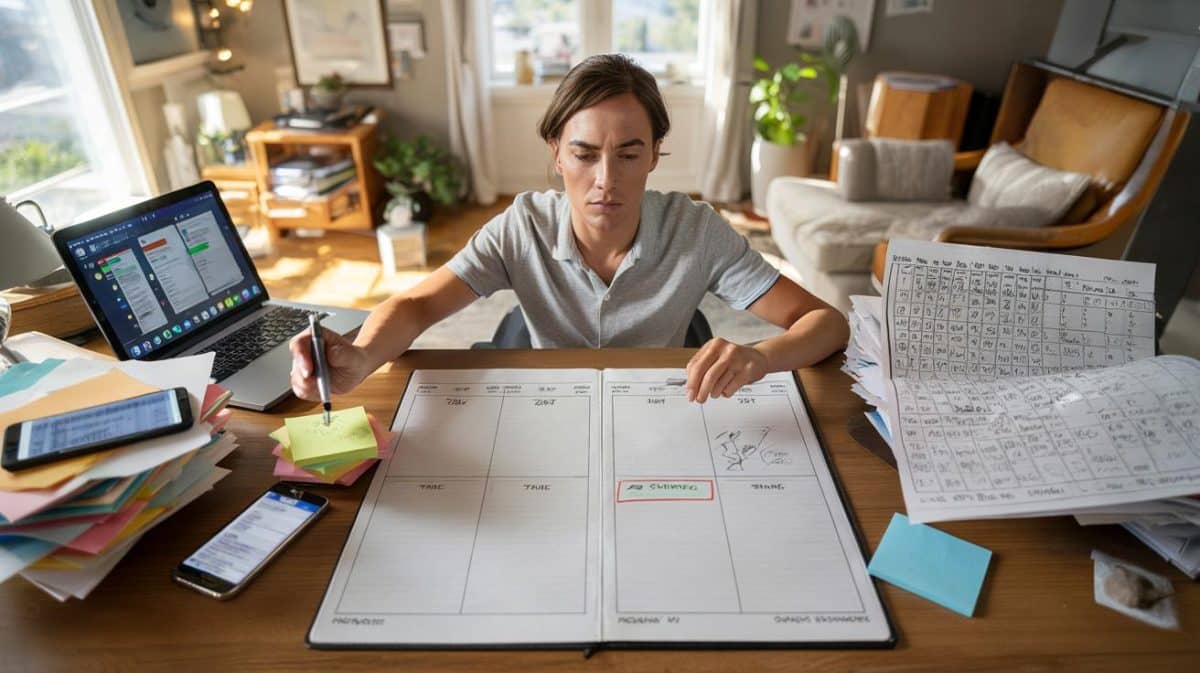
Most people think posture work means an hour of exercises or an expensive ergonomic chair. Reality is more subtle. The real magic is in micro-adjustments you weave into your actual life. Walking to the kettle and letting your shoulders melt away from your ears. Pausing halfway through doomscrolling to straighten your spine and gently widen your gaze.
On a packed train, a tech worker in Manchester started a private experiment. Every time she felt her chest tighten with anxiety, she’d notice how she was standing. Without moving much, she’d shift her weight evenly between both feet, soften her knees and let the back of her neck lengthen. After a few weeks, she reported something odd: the same stressful commute felt slightly less hostile. Same train. Same delays. Different posture, different emotional weather.
None of this means posture is a magic cure for depression or deep trauma. It does mean your body can give your emotions a small nudge instead of a shove in the wrong direction.
People quickly fall into two unhelpful camps. The first: “I’ll fix my posture once I have time, money, motivation.” The second: “I must sit perfectly straight all day.” Both are unrealistic. *Your body isn’t a statue; it’s closer to a conversation partner.* It needs movement, variety, and a bit of curiosity rather than rigid rules.
A more human approach is to pick just one “anchor moment” in your day. Maybe it’s when you unlock your phone, open your laptop, or wait for the kettle to boil. Each time that moment appears, treat it as a cue. Quick scan: where are my shoulders, how’s my breathing, is my head drifting forward? Then make one adjustment, not ten. A tiny tweak you can actually repeat.
Soyons honnêtes : personne ne fait vraiment ça tous les jours. You’ll forget. You’ll remember again when your neck aches or your mood dips. That’s not failure; that’s the lesson. Your body keeps sending you reminders in the language of discomfort, and you slowly learn to answer back.
“The body keeps the score,” wrote psychiatrist Bessel van der Kolk about trauma. The lesser-known flip side is that the body also keeps the hints — those small postural clues that something in your emotional world is shifting before the words arrive.
For practical everyday life, three areas tend to matter most: head position, shoulder tension, and breathing space. When your head constantly juts forward towards screens, your world quite literally shrinks to what’s in front of your nose. Shoulders that ride up towards your ears all day feed your brain a running story of low-level threat. A compressed belly and chest limit your breath, which quietly ramps up anxiety.
- Head: Imagine gently sliding your chin back over your collarbones a few times a day.
- Shoulders: Let them rise on the inhale, then drop heavily on the exhale, like bags of sand.
- Breath: Place a hand on your lower ribs and feel them widen sideways as you breathe in.
None of these fix a bad day. They do something subtler: they stop your body from shouting “danger” when all that’s happening is a hard email, a late bus, a lonely evening. And that small shift often changes what you’re able to do next.
A different way of listening to yourself
Once you start noticing posture, it’s hard to unsee it. Friends who always collapse into themselves when they talk about money. Colleagues whose backs stiffen the instant a certain name comes up. Your own habit of curling your shoulders forward at the first sign of criticism.
This isn’t about policing your body or anyone else’s. It’s more like turning on subtitles for a film you’ve watched your whole life. The dialogue was always there; you just get to read it now. And with that comes a quiet kind of power. You can ask: what happens if I slightly change the script?
The most surprising part is how quickly posture shifts can change social interactions. Stand in a queue with your shoulders lightly open and your gaze horizontal rather than down at your shoes, and strangers tend to respond differently. They hold your eye a fraction longer. They speak to you with a touch more warmth. That feedback loop can soften isolation, especially on days when your mind is convinced you’re invisible.
On a harder level, posture work can feel confronting. Straightening your spine in a room where you usually make yourself small might wake up buried feelings: anger, grief, a sense of “Who am I to take up this space?” That discomfort isn’t a sign you’re doing it wrong. Often, it’s a sign you’re finally letting your body leave survival mode, step by small step.
So the next time you notice your mood sliding, you don’t have to launch into a full self-help routine. You might just pause, breathe, and ask your body one quiet question: “If my posture could shift one centimetre towards how I’d like to feel, what would that look like?” Then try that for a few seconds. No drama. Just a small, physical answer to an emotional moment.
| Point clé | Détail | Intérêt pour le lecteur |
|---|---|---|
| Body–mood loop | Posture constantly sends signals to the brain that shape emotional state. | Helps explain sudden mood drops or boosts that seem to come “out of nowhere”. |
| Micro-adjustments | Small, repeated posture tweaks during real life are more effective than rigid routines. | Makes change feel doable without overhauling your entire day. |
| Everyday cues | Link posture checks to existing habits like checking your phone or making tea. | Turns posture from a chore into a quiet, sustainable tool for emotional self-care. |
FAQ :
- Can changing my posture really improve my mood, or is that just a myth?Research suggests posture and mood influence each other in both directions. A small shift in how you sit or stand won’t erase deep problems, yet it often eases tension, anxiety and mental fatigue enough to change how you handle them.
- Do I need to sit up straight all day for this to work?No. Being rigid often creates more pain. Aim for “often neutral, frequently moving” rather than “perfectly straight”. Short moments of reset scattered through the day make more difference than marathon sessions of forced good posture.
- What if I have chronic pain or a diagnosed posture issue?Then posture is best explored with a professional such as a physiotherapist or osteopath. You can still use gentle cues around breath and head position, but they should complement, not replace, medical or therapeutic care.
- Are power poses a good idea before stressful events?Evidence on classic “power poses” is mixed. Large, open postures can help some people feel readier, yet what matters most is that the posture feels natural, not theatrical. A grounded, comfortable stance tends to calm the nervous system more reliably.
- How can I start noticing my posture without obsessing over it?Pick one or two daily triggers — unlocking your phone, waiting for a page to load, brushing your teeth. Use only those moments to check in with your body. Outside of them, let your posture be, and trust that awareness will slowly grow on its own.