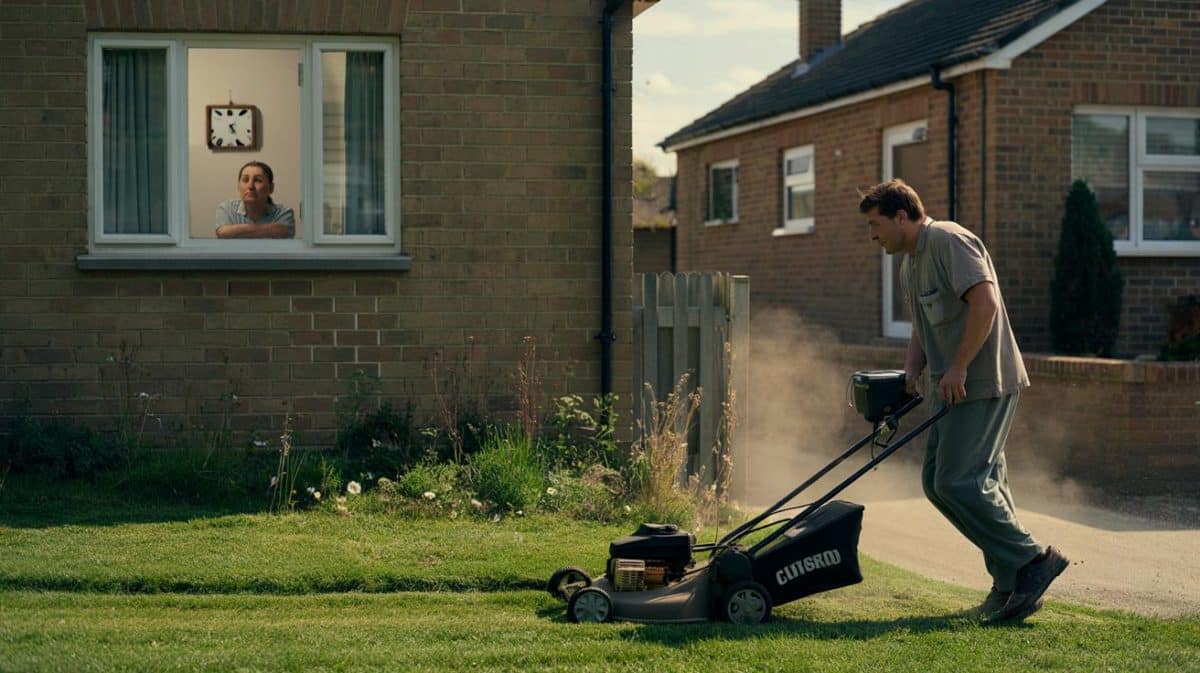
The mug on the desk est froid depuis longtemps.
The to‑do list is half‑crossed, half‑ignored, and your phone keeps flashing with that smug reminder: “Daily habit streak: broken.” You didn’t go to the gym. You didn’t write the pages. You didn’t meditate. Again.
You tell yourself you just need more discipline. A stricter plan. Earlier alarm. Cleaner routine. But the stricter it gets, the faster it cracks. Two good days, maybe three, then a late train or a sick child and the whole thing derails. You start over on Monday. Or next month. Or “when things calm down”.
*What if the real problem isn’t your willpower at all, but the way your expectations are wired?* The strange truth is that people who look insanely consistent often aren’t rigid. They’re quietly flexible. And that’s exactly why they don’t quit.
Why rigid expectations quietly kill consistency
Watch someone on 1 January, full of resolutions, and you can almost see the crash coming. They promise daily workouts, perfect meals, no screens after 9pm. It looks impressive on paper, like an upgraded version of themselves has finally moved in.
Then real life turns up. Trains are late. Kids wake in the night. The boss moves the deadline. That shiny routine you drew like a spreadsheet doesn’t know what to do with chaos. So the first missed day feels like failure, not just a wobble. The story in your head shifts from “I’m on track” to “I’ve blown it”.
Consistency doesn’t die because we’re lazy. It dies because our rules are brittle. When expectations are too tight, the smallest hit cracks the whole structure. Flexible expectations act more like shock absorbers than a glass ceiling. They bend under pressure instead of shattering at the first imperfect day.
Take Sarah, 34, who wanted to start running. She set herself a strict target: 5km every single morning before work. The first week went well; new shoes, new playlist, new version of herself. On day eight, it was pouring rain, she slept badly, and her child refused to get dressed. No run.
That one missed session turned into three. Then she decided she had “fallen off”. Running quietly slid off the calendar. Months later, she tried again, this time deciding she would “move her body” at least four days a week. Walk, run, YouTube workout – anything counted, and the time could shift.
Six months later, she hadn’t missed a week. Some weeks she ran twice and walked twice. Some weeks were all walks. But the thread never snapped. Her target was flexible, so her identity as “someone who moves regularly” stayed intact, even on messy days. *The plan flexed where the old one simply broke.*
Psychologists talk about “all‑or‑nothing thinking” as one of the fastest routes to self‑sabotage. When your goal is defined as “perfect or nothing”, your brain quietly chooses “nothing” the moment “perfect” slips away. That’s why rigid expectations feel heavy. Every action becomes a test of whether you’re succeeding as a person.
➡️ Neither reminders nor sticky notes to stop forgetting important things
➡️ The practical habit that prevents small tasks from piling up
➡️ Why predictability feels calming during chaotic periods
➡️ Milk proteins soften egg texture
➡️ Subsidence slows only when extraction stabilizes
➡️ Neither strict routines nor chaos to manage busy days
➡️ Lawn regulations aim at noise complaints, not ecology
➡️ “Poor people’s foods” resurface during price instability
Flexible expectations shift the game. You’re not judging yourself on the exact shape of the action, but on whether you stayed in the game. Ten minutes counts. A walk counts. A messy draft counts. **Consistency starts to feel easier because success has more doors to walk through.** Instead of one narrow path, you suddenly have a small network of acceptable options.
There’s also a deeper nervous system angle. When your rules are harsh, every disruption feels threatening: proof that you’re behind, not enough, weak. Stress rises, your brain wants comfort, and Netflix wins. When expectations can flex, the same disruption is annoying but survivable. You stayed consistent, just in a reduced mode. That quiet “I didn’t quit” signal is what builds long‑term grit.
Designing flexible expectations that actually work
A practical way to soften expectations without losing ambition is to build “tiers” into your habits. Think of it like a weather forecast for your day: sunny, cloudy, stormy. On sunny days, you do the full version. On cloudy days, the medium one. On stormy days, you drop to a tiny, almost laughable version – but you still show up.
Say your goal is to write regularly. Tier A might be 45 minutes of focused writing. Tier B could be 20 minutes, even with light distractions. Tier C is opening the document and writing one sentence. That’s it. You decide *in the morning* what kind of day you’re having, then you commit to at least Tier C.
This structure keeps the habit alive while respecting that not every day deserves the same demand. You remove the mental drama of “Do I do it or skip it?” and replace it with “Which version can I manage today?” Consistency becomes less about heroics and more about minimum presence. Over time, that minimum presence is what quietly compounds.
One common trap is turning flexibility into a loophole. “I’ll just do the tiny version” becomes the default, even on days when you could handle more. That’s where a little “parler vrai” helps: **Soyons honnêtes : personne ne fait vraiment ça tous les jours.** Heroes who never miss, never complain, never downgrade are a myth shaped by social media, not reality.
So you need a tender form of honesty with yourself. Not the harsh “I’m useless” voice, but the curious one: Am I truly at my limit today, or just bored? Am I choosing Tier C because life’s on fire, or because I opened Instagram first? When you start asking those questions, flexibility stays intentional instead of becoming an escape hatch.
Another error: using flexible expectations but keeping a rigid identity. You tell yourself you’re “bad at consistency” or “not a morning person”, and every small wobble becomes proof. That story will quietly undercut any method. The point of flexible expectations is to give your identity evidence that you *are* someone who keeps showing up – even when the form changes.
“Real consistency isn’t about doing the same thing, the same way, every single day. It’s about returning to what matters, in whatever shape today allows.”
To keep this real and grounded, it helps to write down your personal “consistency contract”. Nothing legal‑sounding. Just a simple note defining your flexible rules, so they don’t shift with your mood.
- My main goal: what I want to be consistent with, in one plain sentence.
- My Tier A, B, C versions for that goal.
- My “stormy day” promise: the absolute minimum I’ll keep, even when everything goes wrong.
- My compassionate clause: the very rare situations where skipping entirely is okay (illness, grief, emergencies).
- My check‑in rhythm: once a week, I’ll review if my tiers feel realistic or need adjustment.
This tiny framework sounds almost too simple. Yet it stops the mental bargaining that eats so much energy. You can look at your day, match it with a tier, and act. Less guilt, more movement. On a small screen, on a crowded train, between two emails, the habit still has a way to live.
Letting consistency feel human again
We love the fantasy of the person who wakes at 5am, drinks green juice, reads for an hour, trains like an athlete, and never, ever misses. On a screen, that looks inspiring. Inside a real body, with a real job, real kids, real fatigue, it feels like standing in front of a flawless shop window you can’t walk into.
On a more honest level, we know life doesn’t move in straight lines. Some seasons are wildfire, some are fog, some are wide open. When your expectations can bend with those seasons, your habits stop fighting reality and start growing inside it. You’re no longer trying to be consistent with a fantasy day. You’re being consistent with the day you actually woke up in.
We’ve all had that moment where we whispered, “I’ll start again when things are less crazy.” That future calm rarely comes. *What if consistency became less about waiting for a calmer life, and more about finding your smallest possible step inside the chaos?* Flexible expectations give you permission to aim high, then adjust without shame. They make room for sick days, late trains, surprise joy, sudden grief – all the texture of being alive.
When consistency stops being a test of your worth and becomes a quiet promise to return, the whole sensation shifts. It feels less like walking a tightrope and more like walking a path with plenty of places to rest. And on that kind of path, people actually keep going.
| Point clé | Détail | Intérêt pour le lecteur |
|---|---|---|
| Flexible expectations | Define several “tiers” of the same habit to match different kinds of days | Reduces guilt and makes it easier to show up even when life is messy |
| Minimum presence | Keep a tiny “stormy day” version so the habit never fully breaks | Protects your identity as someone consistent, even with low energy |
| Gentle self‑honesty | Regularly question whether you’re under‑using your capacity | Prevents flexibility turning into an excuse, while staying kind to yourself |
FAQ :
- Isn’t flexibility just a way of lowering standards?Not if it’s planned. You keep the same long‑term ambition but create different versions of the behaviour, so you can still move towards it on rough days instead of quitting.
- How flexible is “too flexible”?When your “minimum version” becomes your default on normal days, it’s a sign to tighten things slightly or reconnect with why the habit matters to you.
- Can this work for big goals like career changes or marathons?Yes. Break the big goal into daily or weekly actions, then design Tier A, B, C versions. The big vision stays fixed; the daily execution breathes.
- What if I miss even my smallest version?Notice what happened without drama, adjust your tiers if they’re unrealistic, and restart the next day. One missed day doesn’t define the pattern; the story you tell yourself about it does.
- How long before flexible consistency feels natural?Most people notice a shift within a few weeks. As the shame of “failing” drops, it becomes easier to keep coming back, and that repeated return is what starts to feel like a new normal.