The queue at the pharmacy curled almost to the door.
Screens flashed red headlines above people’s heads: strikes, floods, layoffs, another “unprecedented” something. A woman in a navy coat stared at her phone, then slowly locked it, slid it in her bag, and took out a small paper notebook. Shopping list. Meal plan. Bedtime for the kids. Tiny, ordinary lines of ink in a world that suddenly felt like it was spinning sideways.
She exhaled, shoulders dropping a fraction. Same milk. Same bread. Same walk home along the same cracked pavement. Outside, buses honked; someone swore into their phone. Inside her head, the volume dial turned down by a notch.
It looked boring. It was, in a quiet way. And yet that boring list was doing something almost magical.
Why your brain clings to routines when everything goes wild
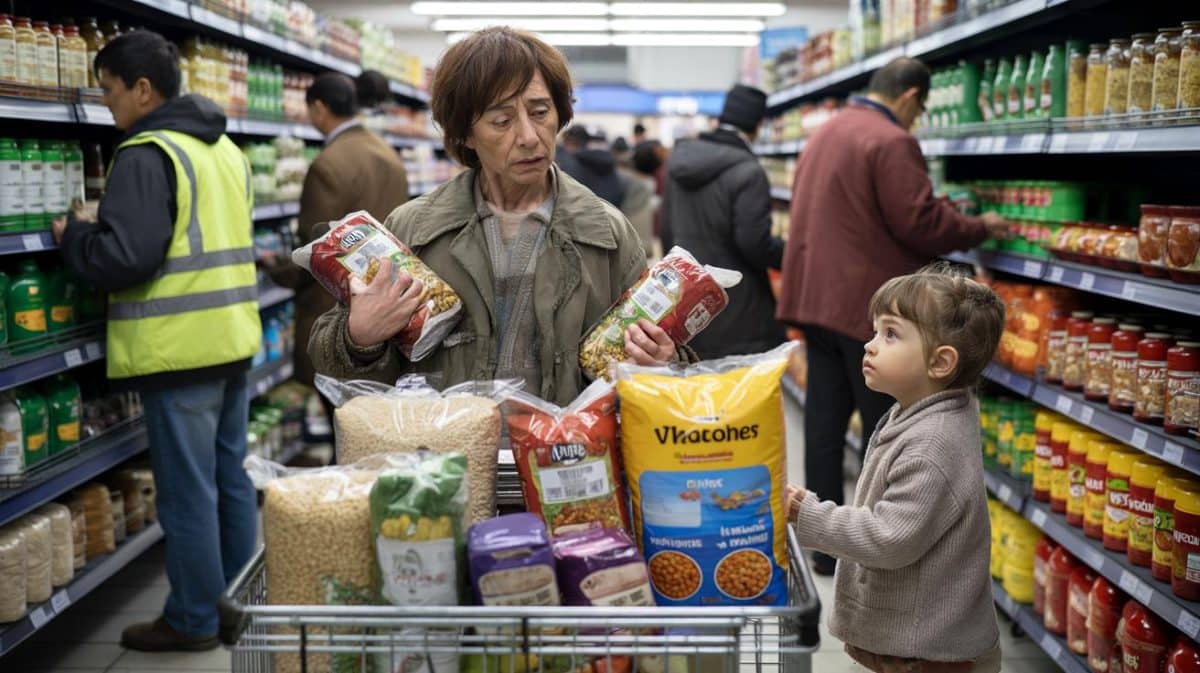
When life starts throwing curveballs, your brain goes into threat-detection mode. It scans for danger, for surprise, for what might go wrong next. That’s useful if you’re crossing a busy road. It’s exhausting when the chaos is everywhere, all the time.
Predictability acts like a low, steady hum in the background. Same mug, same seat on the sofa, same podcast on your commute. Small rituals signal to your nervous system: nothing is attacking you right now. You can stand down, just a little.
We call it “comfort zone” as if it were a weakness. Often, it’s just your brain trying to stop you burning out.
Psychologists see this every time the world lurches. During the pandemic, Google searches for “routine” and “daily schedule” spiked dramatically. People started baking the same banana bread every Sunday, walking the same loop around the block, watching the same show at the same hour.
Many of them weren’t trying to be productive. They were trying to stay sane. One London therapist told me their clients didn’t want big life advice. They wanted to know: “Is it weird that I feel calmer making the bed the exact same way every morning?”
It wasn’t weird at all. It was a survival strategy dressed up as domestic habit.
Underneath, there’s some solid brain science at work. Predictable actions reduce “cognitive load” – the mental effort used to decide what to do next. When you know what breakfast will be or which train you’ll catch, your brain doesn’t waste energy weighing options.
➡️ Why consistency matters more than perfect systems
➡️ Why people who feel organized rarely rely on memory alone
➡️ The psychological reason emotional clarity often comes after rest
➡️ Keep your tank above half: the winter driving habit that prevents a surprisingly common breakdown
➡️ Lawn regulations aim at noise complaints, not ecology
➡️ The psychological explanation for emotional withdrawal during overwhelm
➡️ Boiled citrus peels change indoor scent chemistry, not air quality
➡️ How people regain focus after interruptions without restarting everything
That freed-up energy can be used somewhere else: solving a problem at work, having patience with your kids, or just getting through a rough day without snapping. Predictability also helps regulate stress hormones. Your body learns there are pockets of the day that are safe and repeated, so it doesn’t keep you on red alert 24/7.
Chaos shouts. Routine whispers, *You’ve done this before. You can do it again.*
Small anchors: how to build predictability without trapping yourself
You don’t need a colour-coded life plan to feel calmer. What helps most during chaotic periods is a handful of “anchors”: small, repeatable moments that show up in your day no matter what else goes wrong.
Think of anchors like mental furniture. Morning coffee in the same cup. Ten-minute walk after lunch, even if it’s just up and down the street. A short journalling line before bed: “One thing that made today bearable was…” These things don’t fix the big stuff: your job, the news, family dramas.
They simply give your brain familiar landmarks to touch as it moves through the storm.
One useful trick is to link a new calming ritual to something you already do. You boil the kettle every morning anyway. While it heats, you might stand at the window and take 10 slow breaths. Same time, same place, same action.
Your nervous system starts to anticipate the routine. That predictability matters more than the perfect breathing technique. Over a stressful week, that tiny daily calm moment is worth far more than one “big” self-care day once a month.
Soyons honnêtes : personne ne fait vraiment ça tous les jours. You’ll miss, you’ll forget, life will crash in. But you only need “mostly” for your brain to start trusting the pattern.
“During lockdown, I started a 7 a.m. tea ritual,” said Emma, 34, from Manchester. “Same mug, same playlist, same chair by the window. At first it felt silly. After a while, it felt like the only five minutes of the day that belonged to me.”
That’s the quiet power of predictability: it doesn’t shout, it accumulates.
- Pick one daily anchor that feels kind, not punishing.
- Keep it short enough you can do it on your worst days.
- Do it at roughly the same time or in the same place.
- Let it be imperfect. No streaks, no apps required.
- Notice how your body feels before and after, just for a few seconds.
When predictability heals – and when it quietly traps you
There’s a flip side no one likes to talk about. The same routines that soothe can slowly become cages. When your world feels chaotic, you might start to cling to predictability so tightly that anything unexpected feels unbearable.
That’s when “I like my morning walk” turns into “If I don’t get my exact route at my exact time, the whole day is ruined.” The comfort of routine slides into rigid rulebook. Your brain stops learning that you can handle change, at least in small doses.
In the short term, that rigidity can feel like control. In the long term, it can shrink your life.
The goal isn’t to erase unpredictability; it’s to give your nervous system enough safety that you can face it without shutting down. One simple way is to build *planned* unpredictability into your week, in tiny, low-stakes ways.
Same morning coffee, but a different route to the station once a week. Same nightly TV time, but a new series every now and then. Same Sunday meal, but one ingredient swapped just for fun.
Those micro-variations quietly train your brain: the world can change, and you’re still okay. You’re not throwing yourself into chaos. You’re practicing flexibility while standing on something solid.
That mix of stability and stretch is where resilience grows. Not in grand gestures, but in the small, slightly wonky habits that carry you through a messy week.
In a way, predictability isn’t the opposite of chaos at all. It’s the handrail you grip while you walk through it.
| Point clé | Détail | Intérêt pour le lecteur |
|---|---|---|
| Le cerveau aime les repères | Les routines réduisent la charge mentale et le stress de la prise de décision permanente | Comprendre pourquoi les petits rituels procurent un vrai soulagement |
| Les “ancres” quotidiennes | Une poignée d’habitudes simples et répétées crée une sensation de sécurité intérieure | Savoir quels gestes garder quand tout part dans tous les sens |
| Stabilité + souplesse | Combiner moments prévisibles et petites variations contrôlées renforce la résilience | Trouver un équilibre entre confort et capacité à gérer l’imprévu |
FAQ :
- Is it normal to crave routine more when life feels chaotic?Yes. Your brain is wired to look for patterns and safety. When the outside world feels unstable, internal predictability becomes a kind of psychological home base.
- Can too much routine actually increase my anxiety?It can if it becomes rigid. When you feel unable to cope with even small changes, that’s a sign your routines might be limiting rather than supporting you.
- What’s one simple predictable habit I can start today?Choose a two-minute ritual linked to something you already do: a specific song while brushing your teeth, three deep breaths before opening your laptop, or writing one line in a notebook before bed.
- Why do repetitive tasks like cleaning or cooking feel calming?They’re familiar, they give quick visible results, and they occupy your hands without overloading your mind. That combination often quiets racing thoughts.
- How do I keep routines from feeling boring or suffocating?Keep the core structure the same, but allow small variations: different mug, new playlist, alternate walking route. That way you get both the safety of predictability and the aliveness of tiny surprises.