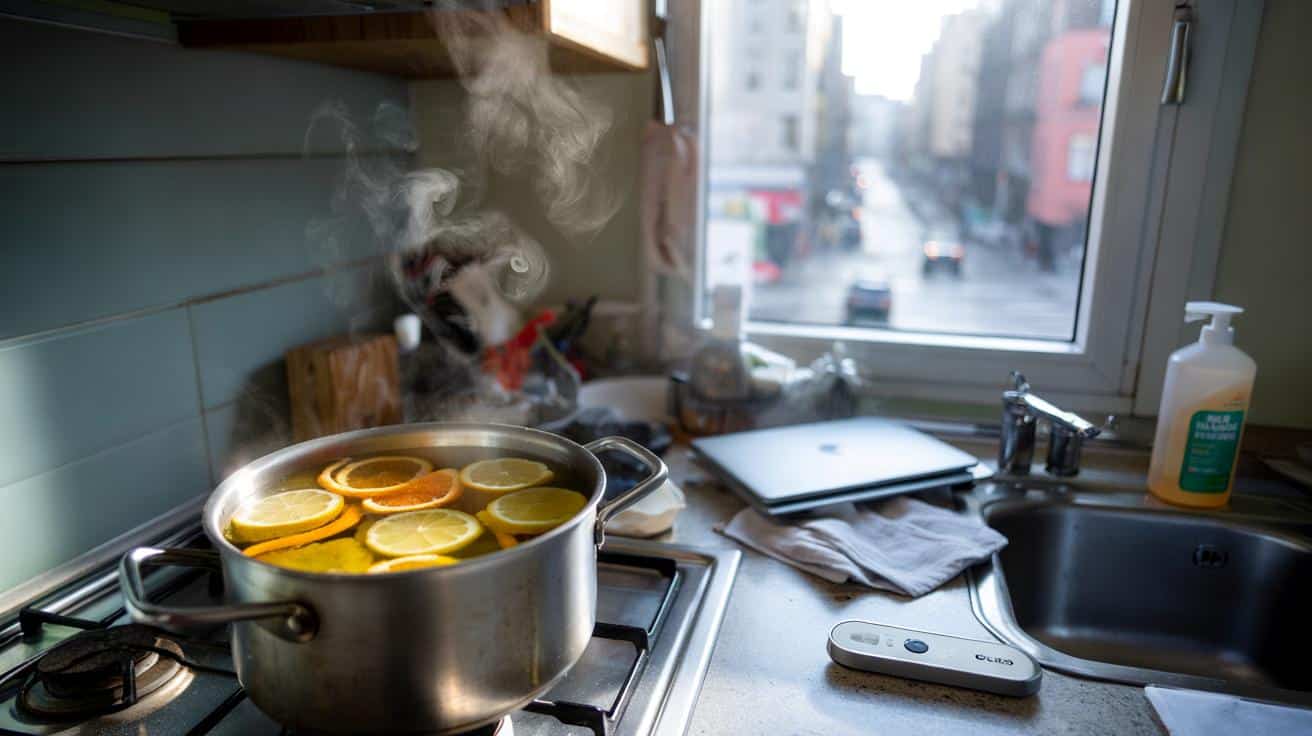
The saucepan is small, dented, and probably older than the cooker it sits on.
Inside, a handful of tired orange and lemon peels tremble in the first lazy bubbles of boiling water. In a few minutes, the whole flat smells like a Mediterranean kitchen crossed with a spa diffuser. The washing-up still waits by the sink. The traffic still growls outside the window. The air doesn’t feel “cleaner” exactly, just different. Sharper. Brighter. As if the room has changed outfits.
People have been doing this for years without thinking twice: simmering citrus peels to freshen a room, as if lemon steam could chase away invisible threats. It feels soothing, domestic, almost ritualistic. Yet somewhere between the stove and the ceiling, something odd is happening. The scent is real, the chemistry is real, but the promise of “purified air” might be more wishful thinking than fact.
And that gap between what we smell and what’s truly in the air is where the story gets interesting.
What really happens when you boil citrus peels
Stand over a pot of boiling orange and lemon peels and you can almost taste the vapour. Your eyes prickle slightly, your throat senses a tang. What you’re feeling isn’t magic; it’s chemistry. Those peels are packed with volatile organic compounds (VOCs) like limonene and other terpenes. When heated, they leap into the air, spreading quickly through your living room, bedroom or open-plan kitchen.
The result is a clear shift in the “personality” of your indoor air. It goes from stale toast and laptop heat to bright, zesty, almost theatrical. The molecules themselves latch onto your nose receptors, rewiring your mood for a moment. Your brain reads it as cleanliness, freshness, even safety. The pot looks ridiculous, but the atmosphere feels instantly upgraded.
One chemistry team in Colorado recently turned this humble kitchen trick into a lab experiment. They boiled citrus peels in a controlled indoor space and tracked what happened in the air minute by minute. Sensors watched as limonene levels rose, reacted with indoor ozone, then slowly faded. The graphs looked like a heartbeat: a sharp spike as the peels boiled, followed by a gradual decline.
What stood out wasn’t a dramatic drop in traditional pollutants. No fireworks, no big “air detox” moment. Instead, there was a quiet rearrangement of the indoor cocktail: more citrus VOCs, some new oxygenated compounds, and a reshuffled mix of things we already live with. The room didn’t become a mountain cabin; it just became a different kind of indoors.
That’s the unsettling bit. Boiling peels doesn’t “wash” the air. It masks, layers and stirs. In some cases, limonene and its cousins can react with traces of ozone to form tiny particles and secondary chemicals, not all of them well understood. The total pollution load doesn’t necessarily drop; it often just changes shape. So your nose thinks: “Fresh!” while the chemistry quietly rearranges itself in the background.
Think of your home’s air as a playlist rather than a single track. Before the pot goes on, your playlist might be coffee, detergent, street fumes and laptop plastic. Behind all that: CO₂ from breathing, tiny particles from cooking, maybe some cleaning sprays lingering.
When you boil citrus peels, you don’t erase those tracks. You add a new, louder song on top – all citrus terpenes and bright notes. Your brain suddenly hears the new favourite and forgets the rest of the list. But the old tracks are still playing quietly in the background, and the total volume hasn’t necessarily gone down.
➡️ The unnoticed link between posture changes and emotional state
➡️ Feeding birds helps until it disrupts migration timing
➡️ The mental reason people fear making the wrong choice more than no choice
➡️ The psychological reason emotional clarity often comes after rest
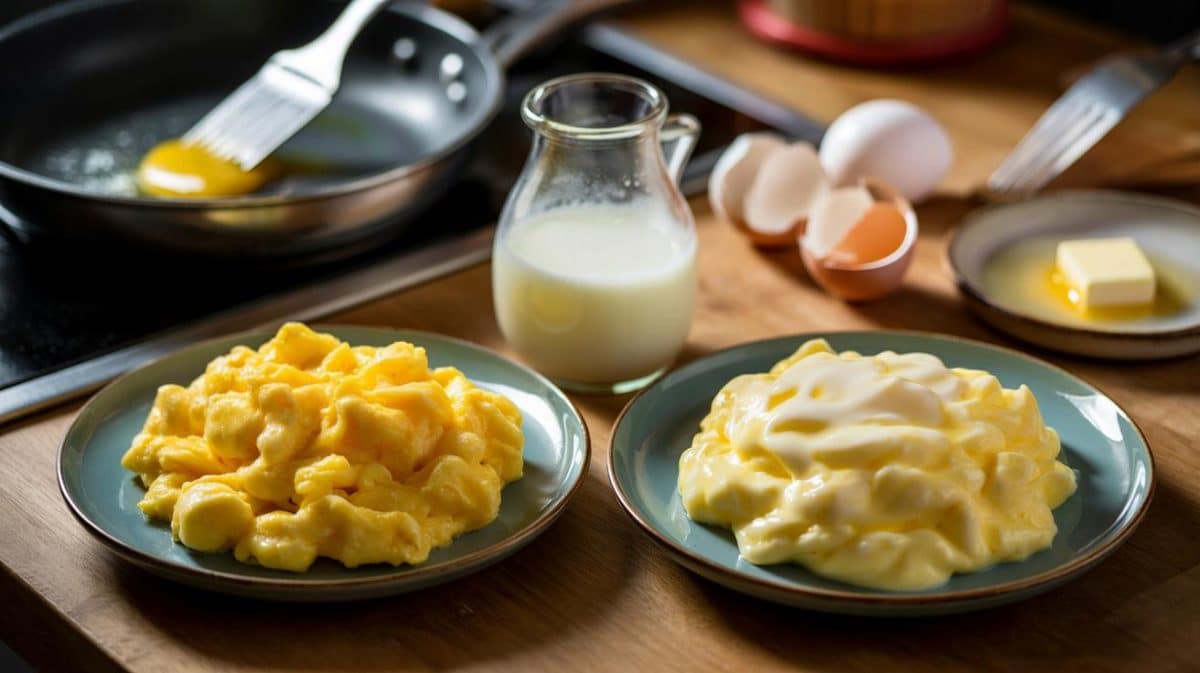
➡️ Milk proteins soften egg texture
➡️ “Poor people’s foods” resurface during price instability
➡️ How people regain focus after interruptions without restarting everything
➡️ Why predictability feels calming during chaotic periods
From a health perspective, scientists talk about air quality in terms of particles, gases like nitrogen dioxide, ozone, and long-term exposure. The citrus-scented steam barely nudges those metrics. It changes the mix of VOCs and the sensory experience, not the basic safety rating of your living room. The pot is atmosphere, not armour.
How to use citrus rituals without fooling yourself
If you love the ritual, keep it. There’s a smart way to do it. Use it like you’d use a candle: as a mood tool, not a cleaning device. Fill a small saucepan with water, drop in fresh or saved citrus peels, and bring it to a gentle simmer rather than a roaring boil. Let it steam for 10–15 minutes, lid half on, then switch off and let the scents drift.
Crack a window while it’s going, even in winter, even “just a little”. Ventilation dilutes both your usual indoor pollutants and the extra chemistry released from the peels. That way, you get the best of both worlds: a lovely smell and a gentle refresh of the air. Think of the stove pot as the soundtrack and the open window as the actual clean-up crew.
Where it goes wrong is when the pot becomes a substitute for basics. People cook fish, fry in oil, spray disinfectants, then rely on boiled lemon to “reset” the room. It doesn’t. The particles from frying and fumes from cleaners don’t vanish just because the air smells like a Tuscan garden. They are still there, swirling silently in the corners.
On a human level, that craving makes sense. We’re tired, busy, and want quick fixes that feel gentle and natural. *A pan of orange peels is emotionally easier than scrubbing an extractor hood or cleaning vents.* Soyons honnêtes : personne ne fait vraiment ça tous les jours. The risk is not the citrus itself; it’s the illusion that a nice smell equals clean, safe air.
So rather than ditching the ritual, it’s about putting it back in its place. Boil peels because the sound, the warmth and the scent calm you down, because your kitchen suddenly feels like a holiday rental, not because you think it’s scrubbing invisible toxins off your walls. The truth is both less glamorous and much more manageable.
One of the scientists involved in this line of research summed it up bluntly in a conference Q&A:
“We don’t want to scare people away from pleasant smells. We just want them to know they’re not the same thing as cleaner air.”
That kind of honesty matters. It gives you back the power to decide what you’re really doing when you stand by the stove with a handful of orange skins. Are you cleaning, or are you comforting yourself?
- Open windows for a few minutes twice a day, even in cold weather: short bursts work surprisingly well.
- Use your cooker hood when frying or grilling, not just when something burns.
- Limit heavy-scented cleaners and sprays; go unscented where you can.
- Keep the citrus ritual as a pleasure, not a promise of “purified air”.
Rethinking “fresh air” in the age of scented homes
Walk through any homeware shop and you’re hit with a whole gallery of indoor dreams: reed diffusers, wax melts, “oxygen” sprays, plug-in forests that never existed in nature. The citrus pan on the hob is the quieter, DIY cousin of that universe. It feels older, more honest, even thrifty. You’re reusing peels, crafting something cosy out of kitchen scraps.
Yet the science keeps nudging us towards the same awkward truth: scent and safety are two different languages. One speaks to your nose and memories; the other speaks in parts per million and particle counts. Both matter, just not in the same way. When boiled citrus peels change your indoor scent chemistry, they’re tuning the emotional soundtrack of your home more than the health metrics.
We’ve all had that moment where we walk into someone else’s house and instantly register its “smell”. Maybe it’s laundry powder, maybe it’s last night’s cooking, maybe it’s a very determined vanilla diffuser. Those micro-judgements are powerful. They shape friendships, dates, even how we feel about our own homes. Citrus scents tap into a deep cultural script: clean, bright, organised, on top of things.
So the question becomes less “Does this purify my air?” and more “What story am I telling myself with this smell?” Are boiled lemon peels your way of coping with city fumes, with the neighbour’s cigarettes, with the oven door you haven’t quite fixed? Or are they just a 15-minute pause in a day of notifications and half-finished chores, a little domestic spell cast over the kitchen sink?
The research on indoor air is getting sharper, and it’s not always comfortable to read. We’re learning that the everyday stuff – cooking, cleaning, scented products – shapes indoor pollution far more than we once thought. At the same time, we’re clinging to rituals that make homes feel like refuges, not just boxes full of micrograms and data points.
Boiled citrus peels sit right at that intersection. They don’t scrub the air clean, and they might add a few extra molecules into the mix. Yet they change something real: how you inhabit your space, how you breathe for those few minutes, how you reset between one tab and the next. That’s not a scientific victory, but it’s not nothing either.
Maybe that’s the quiet takeaway. Keep your windows, your fans, your slightly boring extractor hood. Keep your orange and lemon peels too. Just let them be what they truly are: a small, fragrant lie we tell our noses – and a gentle, human way of making four walls feel a little more like home.
| Point clé | Détail | Intérêt pour le lecteur |
|---|---|---|
| Boiled peels shift scent, not pollution | Citrus terpenes alter the smell profile without significantly lowering harmful particles or gases | Reminds you that “fresh smell” ≠ “cleaner air” |
| Chemistry reshuffles in the background | Limonene reacts with indoor ozone, creating new compounds rather than removing existing ones | Helps you see the hidden side of cosy home rituals |
| Ritual + ventilation beats ritual alone | Short bursts of fresh air and basic extraction matter more than scented hacks | Gives you practical steps to feel good and breathe better |
FAQ :
- Does boiling citrus peels actually clean indoor air?Not in a meaningful way. It changes the scent and some VOC chemistry, but it doesn’t reliably reduce key pollutants like particles or nitrogen dioxide.
- Is it dangerous to boil orange and lemon peels?For most people, no. The emissions are similar to other scented activities at home, though people with asthma or fragrance sensitivities might prefer to skip strong indoor scents.
- Can citrus vapours kill germs in the air?Not at the levels you get from a kitchen pot. Lab tests on essential oils use far higher concentrations and controlled conditions than a normal living room.
- What’s the best way to genuinely improve indoor air?Short, regular ventilation, using extractor fans when cooking, avoiding heavy-scented sprays, and not smoking indoors all have a much bigger impact than boiling peels.
- Are natural scents always better than synthetic ones?“Natural” doesn’t automatically mean safer. Both natural and synthetic fragrances are made of VOCs, and your body reacts to the dose and context, not the marketing label.