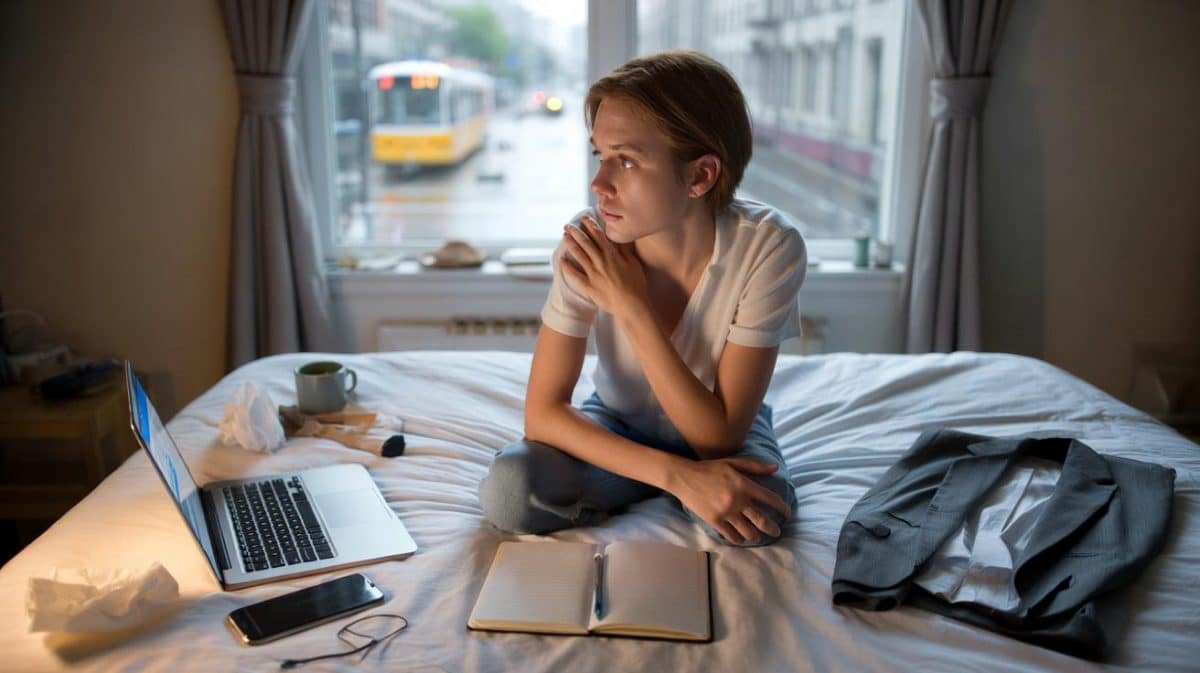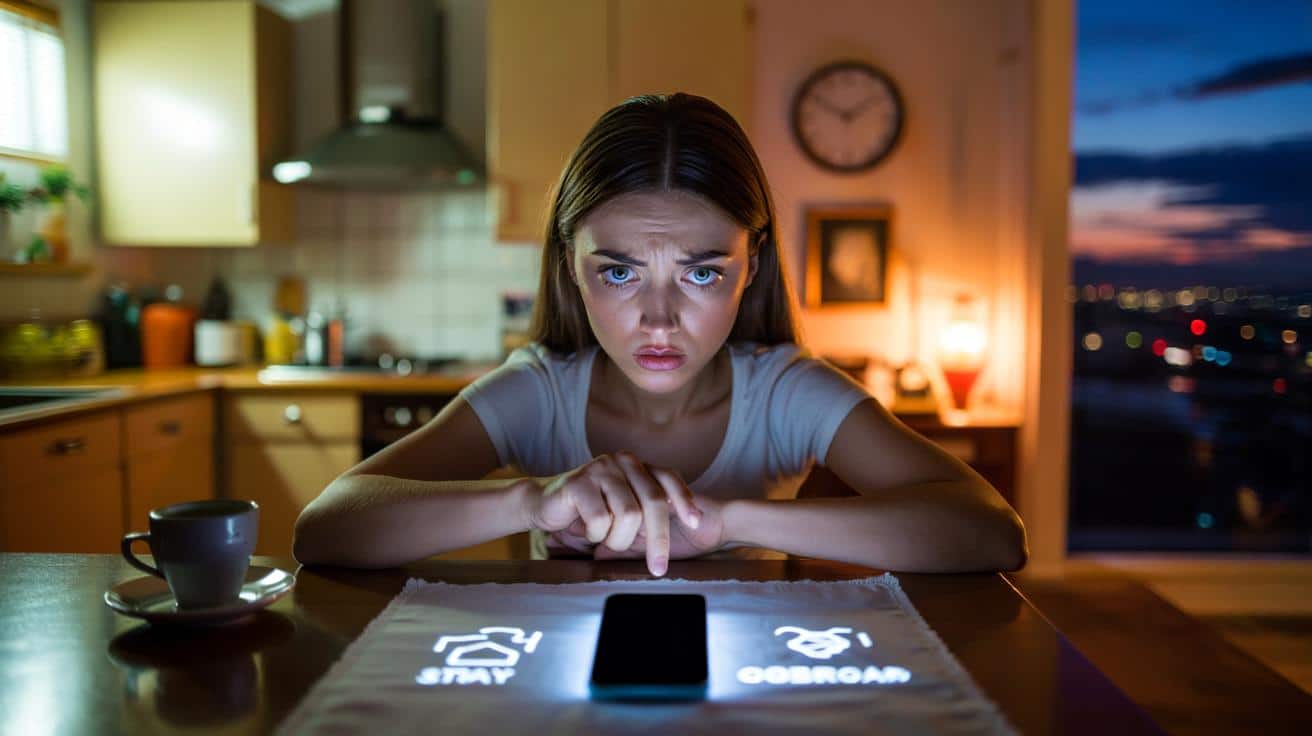
The screen of her phone glows in the dark kitchen, casting blue light on a cold cup of tea. Ella has been staring at two job offers for almost an hour. One tab, a safer role in her current city. The other, a wild leap to another country. She scrolls, compares salaries, rereads emails, checks reviews on Reddit. Her heart races, not at the thought of choosing… but at the thought of choosing wrong.
She locks her phone. “I’ll decide tomorrow.” She’s been saying that for three weeks.
Her life doesn’t move. Her fear does.
Some people fear action like it’s a cliff edge. Others fear inaction like it’s a prison. Strangely, the first group often wins. They stay frozen, and call it “being careful”.
Why does a wrong choice feel more terrifying than no choice at all?
The hidden psychology of “better not choose at all”
We like to believe we’re logical when we hesitate.
We tell ourselves we’re collecting information, weighing options, being sensible adults. Yet inside, a quieter story runs: “If I choose, I can fail. If I don’t, I’m safe.”
Inaction feels clean. No fingerprints, no blame. You can always say, “The timing wasn’t right” or “I’m still thinking about it.” That’s socially acceptable.
Action is messy. It leaves traces, consequences, sometimes regrets. Our brain treats a wrong move like a threat to our identity: smart people don’t mess up, right? So the mind plays its old trick. It whispers: you’re not ready. Wait a bit longer.
On a Tuesday morning in Manchester, James sits in front of a mortgage adviser.
He’s been talking about buying his first flat for four years. He has the deposit. He has a stable job. Prices are climbing. *He knows* all that.
Yet as the adviser slides the paperwork across the desk, his chest tightens. What if the market crashes? What if he meets someone and wants to move? What if he hates the area?
He mumbles something about “needing to think” and walks out.
A year later, the same flat is £30,000 more expensive. He feels sick. Not because of the housing market. Because deep down he knows: he didn’t avoid risk. He just chose a different one by doing nothing.
Psychologists talk about “loss aversion”: we feel the pain of losses far more than the pleasure of gains.
Choosing wrongly is coded by the brain as a potential loss: of time, money, status, face. No choice feels like neutral territory. So our mind quietly overvalues standing still.
There’s also “regret aversion”. We don’t just hate losing. We hate imagining ourselves replaying the scene years later, thinking, “Why did I do that?”
No choice seems to protect us from that haunting replay. If life goes badly, we can blame circumstances, not ourselves. That saves our ego in the short term.
The irony is sharp: by dodging regret, we manufacture a deeper, slower version of it.
How to choose when your brain wants to freeze
One simple method changes the game: shift from “perfect choice” to “good-enough experiment”.
Take the decision you’re stuck on and set a time limit. 24 hours, one week, one month, depending on the size. Write it down. When the deadline arrives, you pick the best option with the information you have. No more research.
Then you treat the outcome as a test, not a final verdict on your life or intelligence.
You’re not carving stone; you’re running an experiment.
This softens the fear. A wrong experiment is data, not a disaster. It’s a quiet but radical mental flip.
Many people try to kill uncertainty before they decide. That’s where they get trapped.
They want a guarantee the relationship will last, the job will be right, the move will feel perfect. So they keep asking friends, reading reviews, watching YouTube testimonials at 1am. The mind spins, the body exhausts, nothing moves.
A kinder approach is to lower the bar of certainty you need.
You might say: “If I feel 65% sure and nothing catastrophic stands out, I move.” That’s it.
Soyons honnêtes : personne ne fait vraiment ça tous les jours. Yet the people who change their lives tend to operate with that kind of rough, humane rule.
There’s also a quieter step: naming the real fear out loud.
Sometimes you’ll find it’s not “I might waste money,” but “If this goes wrong, my family will say I’m irresponsible.”
Or “If I fail, I’ll have to admit I’m not as capable as I pretend.”
When you see the fear clearly, it shrinks a little. You can work with it instead of wrestling shadows.
“We often prefer the pain we know to the risk we don’t,” a therapist in London told me. “So we call our stuckness ‘being sensible’ and get praised for it.”
- Ask: what loss scares me most here — money, pride, belonging, identity?
- Ask: what small version of this decision could I try first, as a low‑stakes test?
- Ask: in five years, which regret feels heavier — trying and failing, or never trying?
Living with choices instead of running from them
We rarely talk about the quiet cost of no choice.
The job you never apply for, the city you never try, the relationship you never define — they don’t send you angry emails. They just fade.
Years later, you might feel a vague ache, a sense that life became narrower while you were “thinking about it”. That ache is the shadow side of safety.
When people look back, they rarely talk about the times they chose and adjusted. They talk about the big things they never gave themselves a chance to experience.
The mind exaggerates the drama of one wrong move and hides the erosion of constant delay.
One emotional shift helps: treating your future self as someone you genuinely care about, not a stranger who’ll deal with the mess.
Imagine them sitting across from you. Ask: if they could vote, would they choose “no decision” again?
Often the answer is a quiet no. Not because future-you is braver, but because they’re the one who has to live with the compound interest of your hesitation.
On a Tuesday like any other, a small yes to an imperfect choice can be the start of a different story.
On a Thursday, you might realise the real risk was letting every day look the same.
➡️ Radiator foil fails when airflow is misdirected
➡️ Neither reminders nor sticky notes to stop forgetting important things
➡️ Keep your tank above half: the winter driving habit that prevents a surprisingly common breakdown
➡️ Boiled citrus peels change indoor scent chemistry, not air quality
➡️ Subsidence slows only when extraction stabilizes
➡️ Lawn regulations aim at noise complaints, not ecology
➡️ Why consistency matters more than perfect systems
➡️ “Poor people’s foods” resurface during price instability
We all know the moment where the cursor hovers over “send”, the finger pauses above “book now”, the heart beats a bit too fast.
That edge is where two stories fight: the story where you stay who you’ve always been, and the story where you let yourself change. One feels safer; the other feels more alive.
Fear of the wrong choice isn’t a flaw. It’s your nervous system trying to protect you from pain, shame and exile. It just miscalculates the maths of regret.
No choice isn’t neutral. It, too, is a choice — only with fuzzier edges and less honest accountability.
If more of us said that out loud, maybe we’d stop worshipping hesitation as wisdom, and start treating small, thoughtful risks as an everyday act of self-respect.
| Point clé | Détail | Intérêt pour le lecteur |
|---|---|---|
| La peur du mauvais choix | Le cerveau amplifie les pertes potentielles liées à une décision active. | Comprendre pourquoi vous restez bloqué face à certains choix. |
| L’illusion du “risque zéro” | L’inaction crée un autre type de risque, souvent invisible sur le moment. | Voir que ne rien décider impacte aussi votre futur. |
| Approche par “expériences” | Traiter chaque décision comme un test réversible plutôt qu’un verdict final. | Rendre les décisions moins lourdes et plus gérables au quotidien. |
FAQ :
- Why do I overthink even small decisions, like what to order or what series to watch?Because your brain often uses the same circuits for big and small choices. If you fear regret or “wasting” time, even trivial decisions can feel loaded with meaning.
- How do I know if I need more information or if I’m just procrastinating?Set a clear information limit: for example, three sources or one evening of research. After that, if you’re still searching, it’s usually anxiety, not logic.
- What if I make a big choice and immediately feel I’ve made a mistake?That “decision hangover” is common. Give yourself a specific window before reacting, then decide what can realistically be adjusted rather than scrapping everything.
- Is it ever wise to choose not to choose?Yes, if you state it consciously: “I’m postponing this until X date because Y needs to happen first.” That’s a strategic pause, not vague avoidance.
- Can therapy really help with fear of making decisions?Often, yes. Under decision fear, there’s usually deeper stuff: fear of judgement, perfectionism, old family patterns. Working on those can quietly transform how you choose.