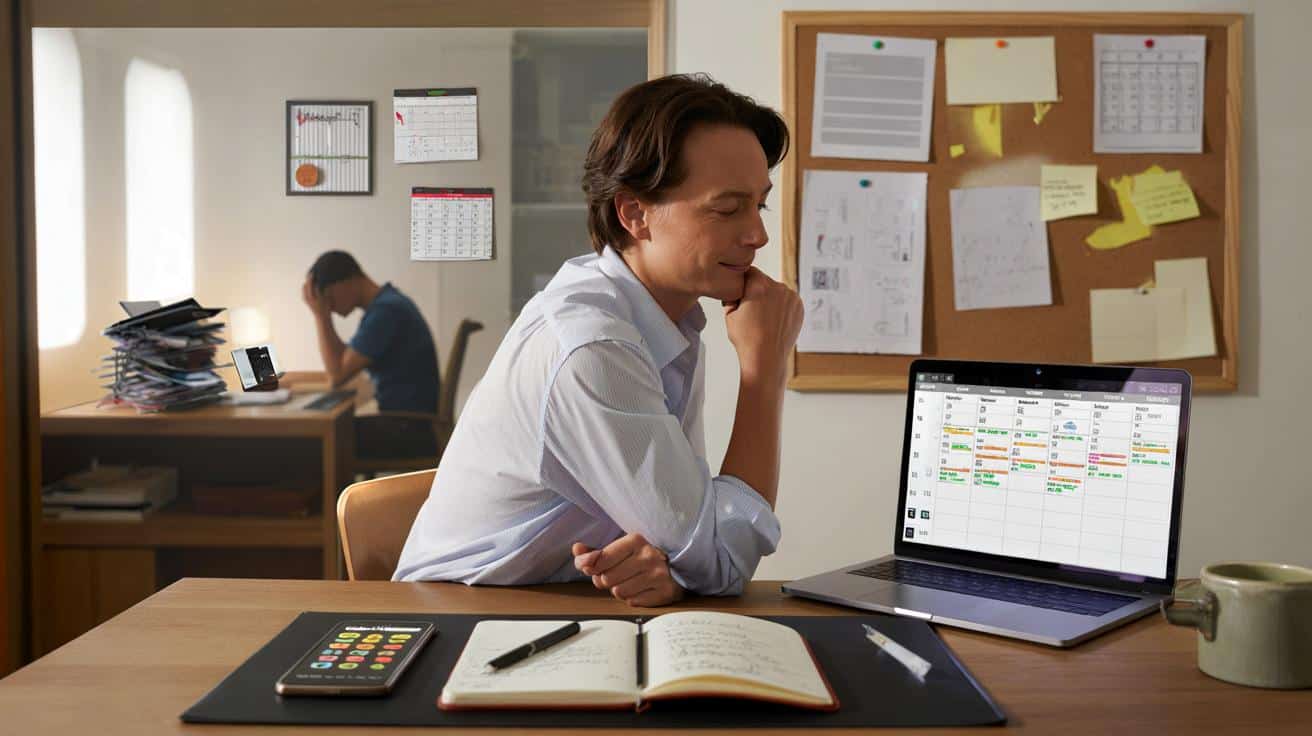
On all knows this person.
Bag always in the same place, keys never lost, projects moving forward while the rest of us scroll and panic. They don’t seem more intelligent, just strangely… calm. Their days look less like a battlefield and more like a series of small, clear steps. Yet when you talk to them, they’re the first to say, “Oh no, I’d never remember all that.”
You might think organised people have some magical memory gene. They don’t. Very often, they trust their memory less than the rest of us. They write, log, schedule, repeat. Lists in notebooks, reminders on phones, labels on boxes. It can look obsessive from the outside, but to them it’s just survival.
The real mystery isn’t how they remember so well. It’s why they deliberately avoid relying on memory at all.
Why the most organised people “outsource” their brain
Watch someone who feels genuinely organised walk into a busy Monday. They’re not mentally juggling fifteen tasks at once. They open a calendar, glance at a list, maybe check a board on the wall. Then they pick one thing and move. Their mind looks free because their life is written down somewhere outside their head.
This is the quiet secret: organised people don’t spend their day trying to remember. They spend it following decisions they made earlier, when their mind was fresher. What looks like discipline is often just a smart refusal to keep everything in short-term memory.
A marketing manager I interviewed in London laughed when I asked how she “remembers everything”. She pulled out her phone and showed me a to-do app so full of recurring tasks it looked like code. “I remember almost nothing,” she said. “I just do what this thing tells me.”
Her screen was packed: weekly finance check, call Mum on Sundays, renew railcard in April, send quarterly reports. Tiny nudges, all timed. She told me she started after missing a tax deadline and paying a painful fine. That moment made her realise her brain was a bad storage unit for long-term tasks.
Now, her memory is reserved for context and ideas, not dates and details. She still forgets where she put her mug. But birthdays? Renewals? Project milestones? Those live in apps, not in her head, and her stress dropped sharply the year she made that shift.
There’s a logic behind all this. Our working memory can only juggle a few things at once before it starts dropping balls. When we load it with “Don’t forget the 3pm call” and “Remember to buy milk” and “Email Alex back”, it has less space for problem-solving or creativity.
People who feel organised treat memory like a fragile resource. They don’t see writing things down as a weakness, but as smart engineering. They create simple systems so their brain can stop shouting reminders at them all day. That quiet in the background? That’s what feeling organised actually sounds like.
➡️ Feeding birds helps until it disrupts migration timing
➡️ Why consistency feels easier when expectations are flexible
➡️ Neither reminders nor sticky notes to stop forgetting important things
➡️ Radiator foil fails when airflow is misdirected
➡️ Why predictability feels calming during chaotic periods
➡️ The psychological reason emotional clarity often comes after rest
➡️ Driving safety debates ignore adaptive testing
➡️ Keep your tank above half: the winter driving habit that prevents a surprisingly common breakdown
How organised people actually do it (without turning into robots)
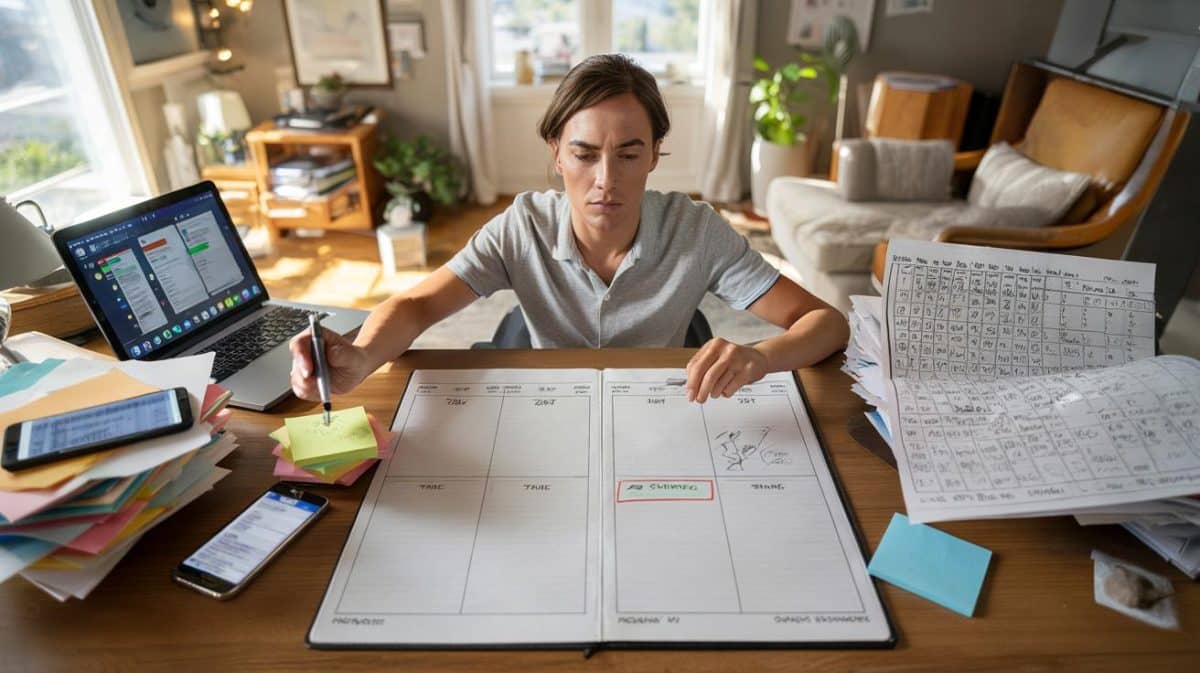
The trick isn’t to document everything. It’s to capture the right things, in the same places, again and again. Many organised people use a simple three-part setup: a calendar for time-specific events, a list for tasks, and a notes space for ideas and references. That’s it. No fancy colour-coding needed.
When something appears — a meeting, a promise, a thought — they don’t debate. They send it straight to its spot. Meeting? Calendar. Action? Task list. Thought to explore later? Notes. The habit is more powerful than the tool. Once the capture reflex is there, their memory stops being a dumping ground and starts acting more like a radar.
On a train late at night, I watched a young dad scrolling through his phone while his toddler slept on his shoulder. Every few minutes he’d pause, open his notes app and type a single line: “Dentist for Leo,” “Ask HR about remote days,” “Summer trip budget?” He wasn’t planning in detail. Just catching the mental flies before they escaped.
He told me he started doing this after forgetting to book a medical appointment for his son. Nothing dramatic happened, but the guilt stuck with him. So he made himself a rule: if a thought matters, it doesn’t stay in his head. It gets a line of text somewhere.
That list on his phone looked messy. Spelling mistakes, half ideas, random fragments. But it was tangible. Later, on a quieter evening, he could turn those fragments into decisions. At that moment on the train, his job was only to not trust his memory.
Organised people often describe a turning point where they realised their brain was lying to them. “You’ll remember this,” it said. Then they didn’t. Once that trust breaks, they shift from “I’ll remember” to “I’ll record”. It’s a form of self-respect, really.
There’s also less drama. When everything lives in memory, every forgotten task feels like a personal failure. When you miss something that wasn’t written down, it can hit your identity: “Why am I so useless?” *External systems remove that sting.* If something slips, you fix the system, not your personality.
That’s why many people who feel organised look relaxed, even when busy. They still have pressure, deadlines, emotional days. They just don’t carry twenty open loops in their head. Their calm isn’t natural; it’s curated.
Practical ways to stop relying on memory alone (that real people actually use)
One simple method repeated across interviews is the “single inbox rule”. Not email — life. Everything goes into one trusted place first. It can be a notes app, a physical notebook, or even the voice memo on your phone. The key is to have one front door, not seven.
During the day, when something pops up — a promise, a thought, a tiny worry — you drop it into that inbox. Two words are enough. Later, once or twice a day, you clear that inbox: move events to a calendar, actions to a task list, ideas to a notes section. It’s less a system than a rhythm that quietly carries you.
Many people fail at organisation because they try to copy a “perfect” system they saw online. Colour-coded calendars, ten categories, life dashboards. Day three, they’re exhausted and stop. Soyons honnêtes : personne ne fait vraiment ça tous les jours.
A kinder approach is to lower the bar. Let your system be ugly and partial at first. A scrappy list that catches half your tasks is already better than a mental list catching none. Forgive yourself for days when you forget to write things down. Restart the next day instead of waiting for Monday or a “fresh start”.
On a more emotional level, people often mix up memory with care. “If I really care, I should remember,” they think. That belief hurts. Parents, partners, colleagues quietly suffer under it. Sometimes the most caring move is to admit your mind needs help.
“I stopped seeing lists as a sign of weakness,” one teacher told me. “They’re love letters to my future self, so she doesn’t have to panic.”
Here’s a simple starter pack many organised people swear by:
- A digital calendar with alerts for anything date-bound (from work meetings to bin day).
- One running to-do list, sorted by “Today / This week / Later”.
- A notes app with three basic sections: Work, Personal, Ideas.
None of this makes you rigid. It gives your mind something soft to lean on.
Living lighter when your memory stops being the hero
Once you stop expecting your memory to carry everything, something surprising opens up: attention. You can actually be in the meeting instead of silently repeating “Pick up the parcel at 5, pick up the parcel at 5.” You can listen properly, because the logistics live elsewhere.
People who feel organised often describe a sense of mental lightness. Not because their lives are simple, but because their commitments are visible. When you can see what you’ve agreed to — on a page, in an app, on a board in the kitchen — guilt has less room to grow in the dark. You’re no longer relying on that vague dread of “I must be forgetting something” to keep you in line.
On a deeper level, there’s also self-trust. By writing things down and returning to them regularly, you show yourself that your future self matters. You treat your own attention as something precious, not endlessly available. That shift is subtle, almost invisible from the outside, yet it changes the way days feel from the inside.
We’ve all had that moment where a tiny forgotten task explodes into a big problem. A missed bill turns into a fee. A forgotten message damages a friendship. The choice to stop relying on memory alone doesn’t remove all those risks. But it tilts the odds. It makes life less about reacting to what you forgot and more about calmly handling what you can see.
| Point clé | Détail | Intérêt pour le lecteur |
|---|---|---|
| Externaliser la mémoire | Utiliser calendrier, listes et notes comme “cerveau externe”. | Diminue la charge mentale et le stress quotidien. |
| Un seul point d’entrée | Avoir une “inbox” unique pour toutes les nouvelles infos. | Évite les oublis et la dispersion entre mille supports. |
| Systèmes imparfaits mais vivants | Accepter des outils simples, parfois désordonnés, mais utilisés. | Rend l’organisation réaliste et durable dans la vraie vie. |
FAQ :
- Is relying less on memory a sign my brain is getting worse?Not at all. It’s usually a sign of maturity: you’re matching your tools to how the brain actually works, not how you wish it worked.
- Should I use digital tools or paper to feel more organised?Both can work. Digital shines for reminders and recurring tasks; paper feels grounding and is great for daily lists. Many people quietly use a mix.
- How do I start if I’m completely overwhelmed already?Begin by emptying your head onto one messy list, without organising it. Then pick just three actions for today. The structure can come later.
- What if I keep forgetting to use my system?Place tiny triggers where you live: a notebook next to the kettle, a reminder on your lock screen, a sticky note on your laptop. Make the system hard to ignore.
- Will using lists and reminders make me dependent on them?You’ll depend less on fragile memory and more on stable habits. Over time, that tends to increase confidence, not reduce it.