The supermarket queue is oddly quiet.
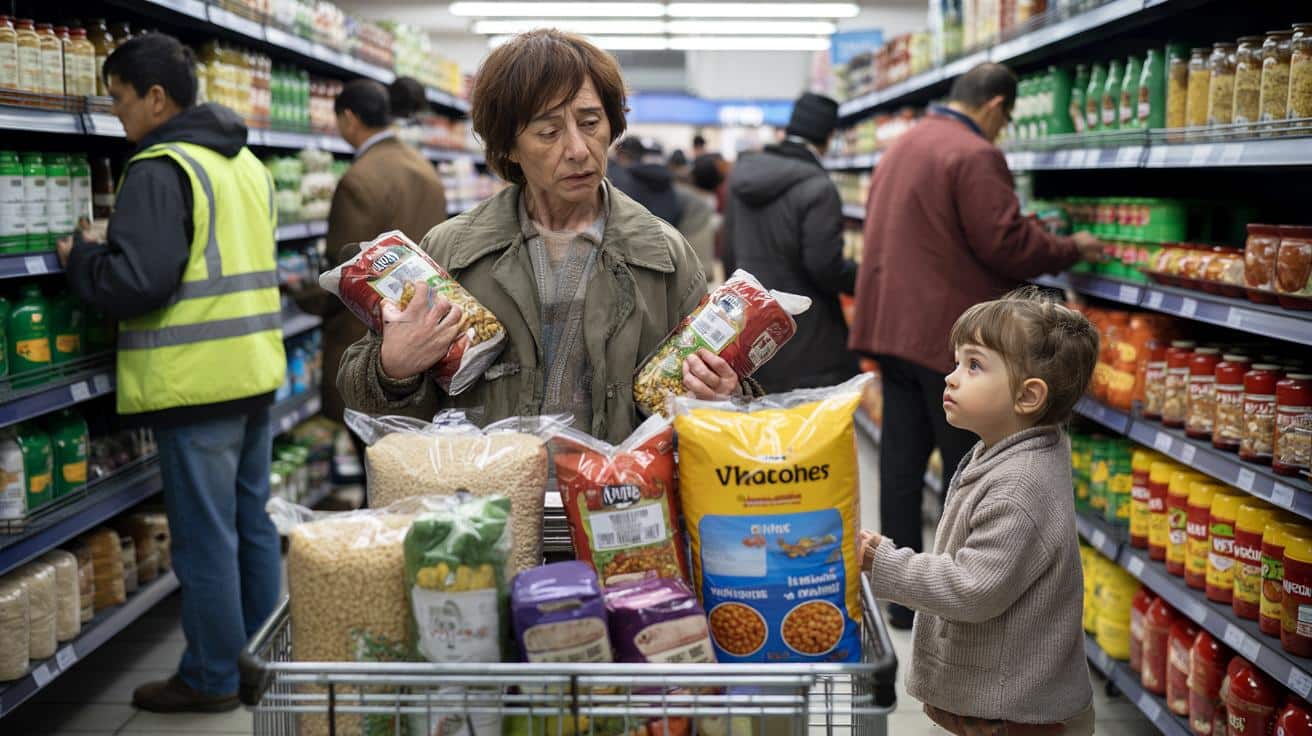
No one is talking, but everyone is staring into their baskets, doing mental maths. A young man in a high-vis jacket puts back a pack of salmon and reaches for baked beans. An older woman hesitates between branded pasta and a no-name bag of yellow-label penne, then sighs and picks the cheapest. A child asks why they’re “not getting the nice yoghurt anymore”. No one answers.
Look closely at the till receipts across Europe, the US, the UK. You’ll see the same pattern: lentils, rice, tinned tomatoes, porridge oats, frozen veg. The foods once quietly labelled “poor people’s foods” are reappearing at the centre of family meals, not as a lifestyle choice, but as a survival tactic. On social media, people share “struggle recipes” their grandparents cooked in the 70s. The past is knocking on the kitchen door.
Why “poor people’s foods” are suddenly everywhere again
Walk through any discount supermarket right now and you can almost feel the shift on the shelves. Ready meals and fancy sauces sit untouched, while the bottom racks – beans, rice, bulk pasta, value bread – are half empty by 5pm. You hear it in half-whispered comments: “We’re going back to basics this month.”
Many shoppers aren’t buying “cheap” because they want to be clever with money. They’re buying it because their wages have stayed still while energy, rent and food prices have sprinted ahead. Inflation graphs look abstract on TV. But when a bottle of cooking oil doubles in price in a year, the impact lands squarely in the trolley. Suddenly, the food that once carried a stigma becomes the only realistic option.
In Birmingham, 34-year-old warehouse worker Liam jokes that he’s “basically living on prison food again”. In reality, he’s tired. “I used to buy chicken fillets, sauces, bit of salad,” he says. “Now it’s rice, kidney beans, frozen mixed veg, cheap mince when it’s on offer. Same four meals on rotation.” His story isn’t unique.
Across the UK, food banks report record demand while low-cost staples fly off shelves. Some German supermarkets now lock up butter and meat to deter theft. In the US, Google searches for “cheap dinner ideas” and “meals with beans and rice” spike whenever inflation headlines hit. These foods – lentils, oats, offal, tinned fish – were once the building blocks of working-class survival. They’re trending again, but not because they’re fashionable. Because they’re all that fits the budget.
What’s happening is brutally simple: when prices rise faster than pay, people don’t stop eating. They just change what they eat. Economists call it “downshifting consumption”. Grandparents call it “making do”. The hierarchy of food snaps back into place: carbs first, proteins rethought, treat foods stripped out.
Marketing tried for years to convince us that “real meals” need premium ingredients and branded sauces. Price instability is tearing that illusion away. Underneath, the same old survival foods are waiting: potatoes instead of pricey grains, carrots instead of exotic veg, tough cuts instead of chicken breast. Inflation doesn’t just empty wallets. It quietly rewrites what dinner looks like.
How people are turning “poor foods” into everyday lifelines
In kitchens hit hard by rising costs, there’s a simple method emerging: build meals around one cheap base ingredient, then layer on whatever else you can afford. Start with rice, pasta, oats, potatoes, or dried beans. That’s your anchor. Then add flavour with the small things that don’t change in price as wildly: onions, garlic, spices, a bit of stock cube, a spoon of tomato paste.
This is how a bag of lentils stops feeling like a symbol of hard times and becomes **a flexible tool**. A big pot of lentil stew on Sunday can be soup on Monday, curry on Tuesday, and pie filling with mashed potatoes on top by Wednesday. The method isn’t glamorous, but it’s repeatable. One big batch, several different plates. Soyons honnêtes : personne ne fait vraiment ça tous les jours. Yet people are quietly reshaping their routines, one pot at a time.
➡️ Subsidence slows only when extraction stabilizes
➡️ The psychological reason emotional clarity often comes after rest
➡️ Why predictability feels calming during chaotic periods
➡️ The unnoticed link between posture changes and emotional state
➡️ The practical habit that prevents small tasks from piling up
➡️ Why consistency matters more than perfect systems
➡️ Why people who feel organized rarely rely on memory alone
➡️ How people regain focus after interruptions without restarting everything
The biggest shift isn’t just what’s on the plate. It’s how people think about leftovers and scraps. On TikTok, you’ll find young adults learning to boil chicken carcasses for stock, something their great-grandparents did without a second thought. In London, a mother of two describes saving every crust of bread for “poor man’s pudding” – stale bread baked with milk, sugar and a bit of cinnamon.
We’re seeing a reluctant revival of skills that were once common in low-income households: stretching mince with lentils, turning bruised fruit into compote, transforming yesterday’s rice into fried rice with frozen peas and an egg. People swap tips not out of curiosity but out of necessity. The emotional weight is real. On a bad day, “budget food hacks” can feel less like empowerment and more like a reminder that the basics now count as strategy.
The hard truth is that many of these so-called “poor people’s foods” were always quietly brilliant. Dried beans are packed with protein and fibre. Oats keep you full for hours. Whole chickens, bought whole instead of in neat fillets, cost less per kilo and feed more people. The problem was never the food itself. It was the judgement attached to it.
Now that more middle-income households are feeling the squeeze, that stigma is eroding a bit. *When everyone is broke, nobody wants to pretend they’re not.* Food that was once sneered at is suddenly being rebranded as “rustic”, “hearty”, “old-school”. Price instability has exposed a cultural hypocrisy: we worship peasant food in restaurants, but we side-eye it in supermarket baskets. That tension is playing out, night after night, around ordinary kitchen tables.
Practical ways to reclaim “poor foods” without the shame
One practical gesture stands out among families navigating higher prices: picking two or three “house foods” and learning to cook them ten different ways. Think chickpeas, oats and potatoes. Or rice, eggs and tinned tomatoes. The idea is simple. You keep these stocked, you master a few seasonings, and you rotate dishes so your week doesn’t feel like punishment.
Chickpeas can be curry, hummus, salad add-ins, traybake partners for vegetables, or roasted with spices as a snack. Oats become porridge, crumble topping, savoury oat risotto, even basic oat pancakes. Potatoes stretch from mash to wedges to soups to tortilla-style omelettes. By deliberately choosing these humble foods as “house specials”, some people feel less like they’re failing and more like they’re building a signature way of eating around what they can genuinely afford.
Where things often go wrong is when people try to cook “like normal” but just cheaper. That usually ends in frustration. Buying supermarket basics, then trying to mimic restaurant dishes perfectly, can highlight everything you can’t buy anymore. Switching mindset helps: instead of asking “How do I make this luxury meal cost less?”, people who cope better ask, “What can I make that’s tasty with what I’ve actually got?”
Many also hit a wall with time and energy. Long-soak beans, homemade bread, elaborate batch cooking – it looks virtuous on Instagram. After a 10-hour shift, it feels impossible. That’s where tiny shortcuts matter: frozen onions instead of fresh chopping, pre-soaked lentils, one-pan bakes rather than multi-pot dinners. An empathetic truth runs through all these small choices: **you’re not lazy, you’re exhausted**. And food that respects that reality is the food that gets cooked.
“I grew up embarrassed by the food we ate,” says Maria, 29, a care worker from Leeds. “Now I’m making the same dishes for my friends and calling it ‘peasant pasta’. They love it. They don’t realise it’s just tinned tomatoes, garlic, and the cheapest spaghetti I can find.”
Her story mirrors a quiet cultural flip happening across social platforms and dinner tables. What was once a survival tactic is being gently reframed as resourcefulness. Not romanticised poverty, but a kind of everyday resilience that refuses to apologise for buying the value range. That matters, emotionally. Shame makes people hide and suffer in silence. Shared recipes make them feel less alone.
- Keep one or two cheap “hero ingredients” always in the cupboard (rice, oats, chickpeas).
- Learn three no-fuss flavour bases: garlic-onion-tomato, soy-garlic-ginger, or oil-lemon-herbs.
- Plan for one “freezer rescue meal” a week from mixed leftovers.
- Let yourself have one small, non-negotiable treat – a specific tea, chocolate bar, or cheese – to avoid burnout.
What “poor people’s foods” reveal about how we live now
When you watch what people cook during unstable times, you learn a lot about what they value. Not in a glossy “what’s your favourite restaurant?” way, but in a raw, end-of-the-month kind of way. You see parents quietly eating less so their kids can have bigger portions. You see flatmates pooling coins to buy a sack of potatoes because it’s the one thing that can stretch across every meal.
You also see the limits of individual “savvy” in the face of structural problems. No amount of clever batch cooking can cancel out rents that swallow half a paycheck or gas bills that double overnight. Yet inside that tough reality, people are still finding pockets of agency. They trade recipes on WhatsApp, share bulk buys with neighbours, post their best £1 meals online like tiny acts of resistance.
The foods themselves – beans, rice, oats, cheap veg, tinned fish – haven’t changed in a century. What’s shifting is our willingness to talk honestly about why so many of us are eating them again. On a bad day, the return of “poor people’s foods” feels like a step backwards. On a clearer day, it looks like a reminder of how fragile the illusion of endless comfort really was.
Maybe that’s why these conversations spark so much reaction. They’re not just about recipes. They touch on class, pride, old wounds and quiet strengths. They make us ask awkward questions: Who gets praised for eating “simple, rustic” food, and who gets judged for it? Why do we glamorise “farm-to-table” while side-eying the value aisle? Where is the line between coping and normalising struggle?
On a very basic level, “poor people’s foods” are just tools. They help a family reach payday. They help someone pay the electricity bill and still eat something warm. But they also carry stories – of grandparents who survived harder times, of communities that made feasts from scraps, of neighbours who passed recipes over the fence. Sharing those stories now might be one of the few things that doesn’t cost anything at all.
| Point clé | Détail | Intérêt pour le lecteur |
|---|---|---|
| Retour des aliments “pauvres” | Riz, lentilles, conserves, avoine et patates reviennent au centre des repas quand les prix s’envolent. | Comprendre pourquoi votre panier de courses change et que vous n’êtes pas seul. |
| Stratégies de survie en cuisine | Choisir quelques ingrédients “héros”, cuisiner en gros volumes, transformer les restes. | Trouver des gestes concrets pour dépenser moins sans renoncer au goût. |
| Dimension émotionnelle et sociale | Stigmate de la “nourriture pauvre”, fierté retrouvée, partage de recettes entre générations. | Mettre des mots sur ce que vous ressentez face à ces changements et en parler autour de vous. |
FAQ :
- What exactly are “poor people’s foods”?They’re low-cost, filling staples like beans, lentils, oats, potatoes, rice, offal, tinned fish and basic bread that historically fed working-class and low-income households.
- Are these foods actually healthy?Many of them are, yes. Pulses, whole grains and root vegetables can be very nutritious; the health impact mostly depends on how they’re cooked and what’s eaten alongside them.
- How can I use these ingredients without feeling deprived?Focus on flavour, not status. Use herbs, spices, onions, garlic and acids like lemon or vinegar, and think in terms of cosy, satisfying dishes rather than “cheap food”.
- Is it wrong to call them “poor people’s foods”?The phrase carries stigma and class history, which can hurt. Some people are reclaiming it to talk honestly about struggle; others prefer “staples” or “peasant foods”. Context and tone really matter.
- What’s one simple change I can make this week?Pick a single staple – like lentils or oats – and learn two easy recipes with it. Let that become a quiet safety net in your routine, not a badge of shame.