The emails, the texts, the crumbs on the kitchen counter.
The jumpers on the chair you *meant* to fold three days ago. None of them dramatic on their own, all of them quietly stacking up in the background of your life. By the time you notice, it feels like everything is late, everything is messy, and your brain is permanently five steps behind.
Most of us don’t get overwhelmed because of one huge crisis. We drown in teaspoons: the “I’ll do it later” tasks that never find a later. Your inbox, your laundry basket, that shelf you keep meaning to fix — they all tell the same story. Not of laziness, but of a system that doesn’t quite work.
There is a tiny, practical habit that breaks this pattern. It doesn’t require a new app, a colour-coded planner or a 5am miracle routine. It fits in the cracks of a normal day. And once you see it, you can’t unsee it.
The invisible weight of small unfinished things
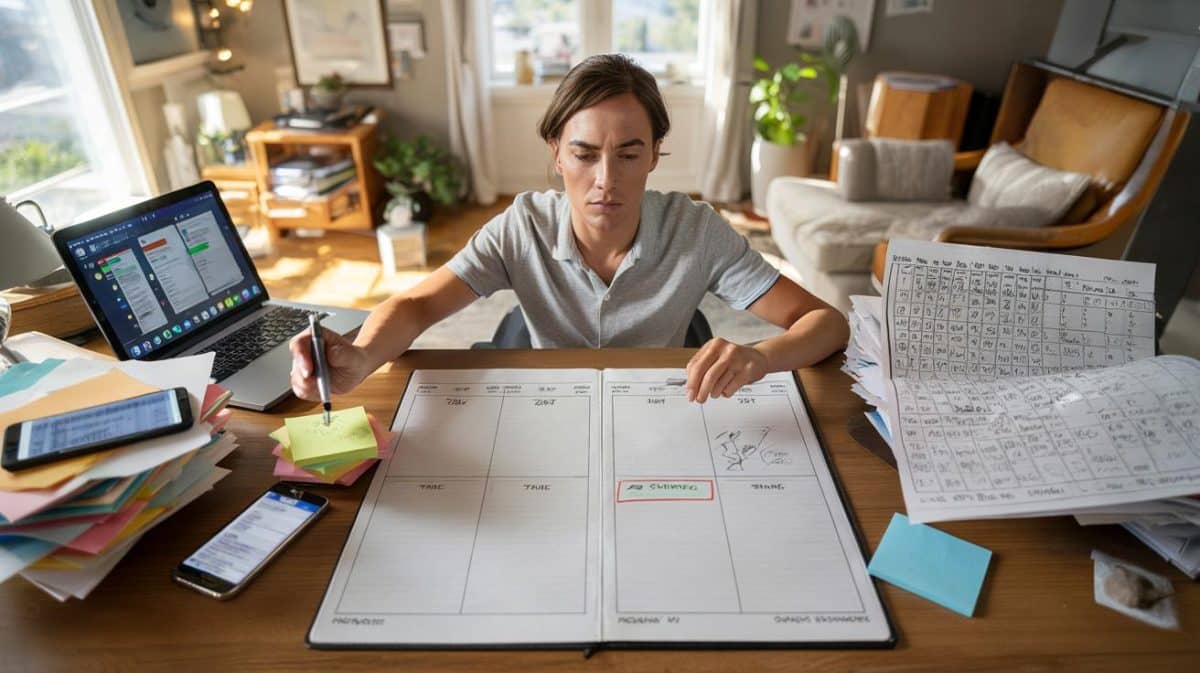
There’s a very specific kind of tired that hits at 9:30 pm. The house is quiet, your laptop is shut, and yet your shoulders are still tense. You scroll, you half-watch a series, but your mind is buzzing with tiny open loops: reply to Sarah, book dentist, upload that receipt. None of them are hard. All of them feel oddly heavy.
Psychologists call this the “Zeigarnik effect”: our brains keep pinging us with unfinished tasks. It’s like carrying dozens of open browser tabs in your head. One tab is fine. Fifty tabs and the whole system slows down. That vague sense of being behind on life isn’t imaginary. It’s the weight of small, incomplete things you move from one day’s to‑do list to the next.
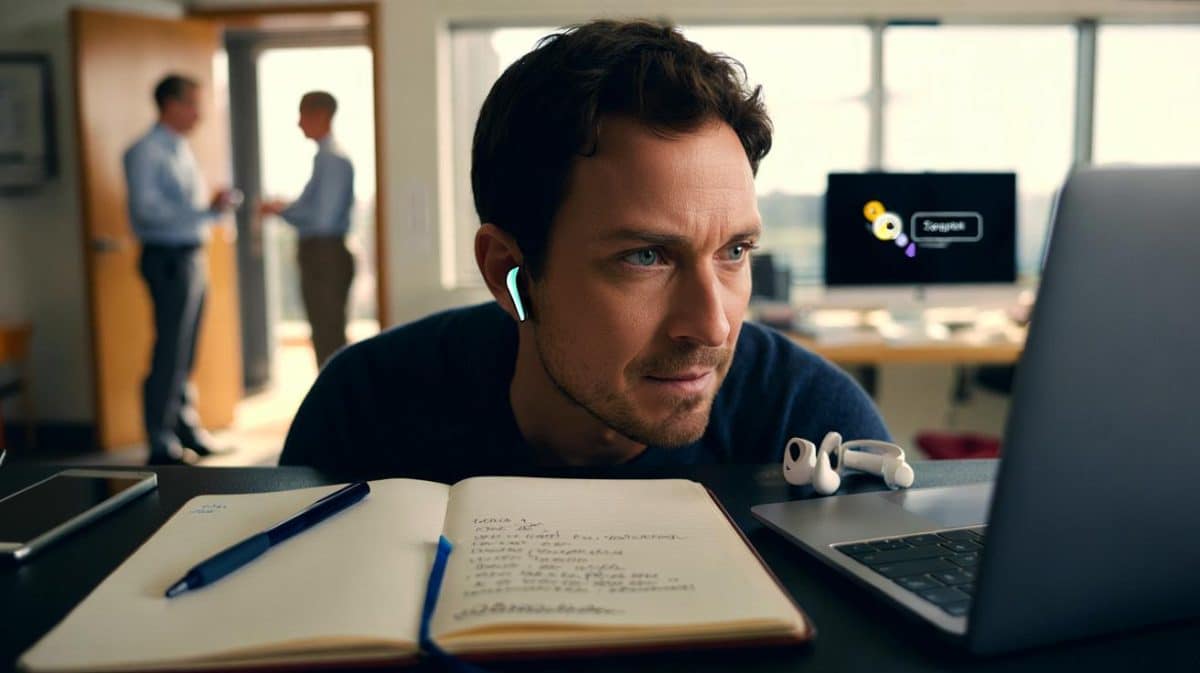
On a Tuesday morning in London, I watched this play out at a co‑working space near King’s Cross. A freelance designer sat down with good intentions, coffee in hand, to tackle a big client project. Within 20 minutes, she’d paused three times: once to quickly pay a late bill, once to answer a “Have you seen this?” Slack message, once to book a train. Each interruption took less than two minutes, but the focus tax was brutal. Her afternoon slipped away in a blur of micro‑tasks and guilt.
Now stretch that across a whole life. The suitcase that lives half‑unpacked at the foot of the bed. The form you keep printing but never signing. The WhatsApp chats where you “leave them on unread” as a reminder. You don’t just lose time; you live in a low-level fog of unfinished business. On a bad week, it starts to feel like a personality trait: “I’m just not an organised person.” In reality, it’s usually a missing habit, not a missing character strength.
Here’s the quiet, logical bit that most productivity advice skips. Big goals — write a book, get fit, change job — are built on a foundation of boring, small tasks handled cleanly. If the basics pile up, your brain stops trusting you. Every time you say “later” and don’t follow through, you train a tiny part of yourself to expect delay, clutter, backlog. That’s why traditional to‑do lists can feel so demoralising: they show you the promise, not the delivery.
The flip side is oddly hopeful. When you handle small tasks in a sharper way, you start to reverse that training. Your brain gets evidence that things do get finished, and quickly. You feel lighter not just because the drawer is tidy, or the email is answered, but because the loop is closed. The system feels less noisy. This is where one very simple habit comes in — a kind of “micro-commitment” you can apply everywhere.
The two-minute rule that stops the pile‑up
The habit is disarmingly simple: if a task takes less than two minutes, you do it immediately. You don’t write it down, you don’t park it, you don’t tell yourself you’ll batch it later. You act. Email that needs a yes/no? Answer now. Mug next to the sink? Rinse and put it in the dishwasher. Coat on the chair? Hang it up as you pass. If it’s under two minutes, it doesn’t get to live rent‑free in your head.
➡️ Lawn regulations aim at noise complaints, not ecology
➡️ The psychological reason emotional clarity often comes after rest
➡️ Why consistency matters more than perfect systems
➡️ The mental reason people fear making the wrong choice more than no choice
➡️ How people regain focus after interruptions without restarting everything
➡️ Neither strict routines nor chaos to manage busy days
➡️ The unnoticed link between posture changes and emotional state
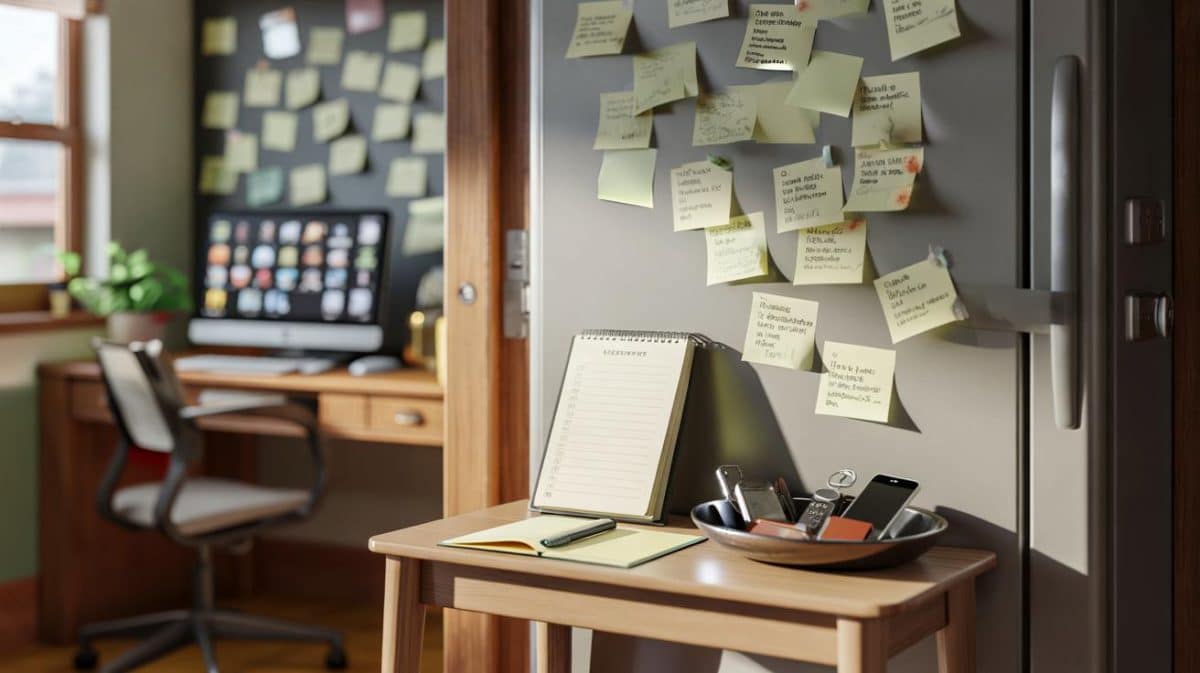
➡️ Neither reminders nor sticky notes to stop forgetting important things
This “two-minute rule”, popularised by productivity writer David Allen, sounds almost trivial. Yet in practice, it’s like turning off a tap that’s been slowly flooding your mental space. The win isn’t just the minute saved. It’s that the task never becomes a nagging reminder. Over days and weeks, the absence of this background noise changes how your life feels. Surfaces stay clearer. Inboxes become less hostile. You start to trust yourself a little more.
On paper, it looks obvious. In real life, we bump into resistance. You’re in the middle of something and a quick task appears, and your instinct is to swipe it away: “I’ll deal with that later.” That’s normal. The trick is to shift the story in your head. Instead of “later”, you quietly phrase it as, “Under two minutes? Then it’s happening now.” No negotiation, no drama. Just a low-key rule of the house, like brushing your teeth.
This is where the human part kicks in. You will forget. You will have days where every tiny task feels like an insult and you want to leave the mug on the table out of pure principle. That’s okay. You’re not a machine, and this isn’t a moral test. **It’s just a way of reducing friction between you and the life you say you want.** When it works, it feels less like discipline and more like kindness to your future self. Tomorrow-you has enough to deal with; they don’t need today’s crumbs as well.
There’s a quiet confidence that comes from seeing fewer “I’ll do it later” ghosts around you. One reader described implementing the rule for just a week: every tiny task got done on sight. She didn’t become a different person; she became someone slightly less cornered by her own procrastination. Her phrase stuck with me: “My home didn’t look that different, but my brain did.”
“Most people overestimate the big overhaul and underestimate the power of tiny, consistent finishes,” a London-based productivity coach told me. “The two-minute rule is less about time and more about identity. You start to see yourself as someone who closes loops.”
- Use the rule only when you’re not in deep focus on something important.
- Keep it for genuinely small tasks, not as an excuse to avoid bigger work.
- Pair it with a simple parking lot list for anything that clearly needs more than two minutes.
- Watch how your environment changes after a week; notice, don’t judge.
Living in a world with fewer “laters”
Once you start playing with this habit, something subtle happens. Your day is dotted with micro‑moments of completion. You reply, you file, you wipe the counter, you move the parcel from the hallway to the return point. None of these acts will ever feature in a life highlight reel. Yet they quietly rewrite your relationship with time. You’re no longer constantly borrowing from the future to prop up the present.
On a deeper level, it’s about treating your attention as something precious, not endlessly elastic. Every postponed tiny task comes with a tax: you have to remember it, re‑notice it, re‑decide on it. The two-minute rule slices through that cycle. Rather than touching the same small thing four or five times mentally, you touch it once physically and it’s done. It’s strangely calming. On stressful weeks, it can be the difference between a home that supports you and a home that seems to argue back.
On a human level, this also shifts how you see yourself. You’re no longer the person “who never keeps up with admin”. You’re the person who hits “send”, who rinses the mug, who hangs the coat. Tiny actions, big narrative. Soyons honnêtes : personne ne fait vraiment ça tous les jours, parfaitement, sans exception. But perfection isn’t the point. What matters is the direction of travel. Fewer half-finished things. More clean exits. A life with slightly fewer invisible weights pulling on you as you move through your day.
| Point clé | Détail | Intérêt pour le lecteur |
|---|---|---|
| La règle des deux minutes | Tout ce qui prend moins de deux minutes est fait immédiatement | Réduit le nombre de petites tâches qui s’accumulent et saturent l’esprit |
| Moins de boucles ouvertes | On ferme rapidement les dossiers simples au lieu de les repousser | Diminue la charge mentale et ce sentiment diffus d’être toujours en retard |
| Identité plus confiante | On se voit comme quelqu’un qui termine ce qu’il commence | Augmente la motivation et la confiance pour s’attaquer aux gros projets |
FAQ :
- Doesn’t the two-minute rule break my focus all the time?Use it mainly when you’re not in deep work mode, or between tasks; during focused work, park quick tasks on a note and clear them in a short burst later.
- What if a “two-minute” task always turns into ten minutes?Be strict: if there’s any doubt it will spiral, add it to a list for later instead of starting and resenting it.
- Can this replace my to‑do list?No, it’s a complement; your list is for anything that clearly needs more than two minutes of real attention.
- How do I remember to apply the rule?Pick one trigger location — like your kitchen or inbox — and practice it there for a week before expanding.
- What if I already feel too exhausted to do even tiny tasks?Start microscopically small, one or two actions a day, and use the quick wins as a way to rebuild energy, not drain it.